
10 tips for reducing your hot tub’s electricity bill
Enjoying a spa at home is a real luxury, but its electricity consumption can quickly put a strain on your budget if your installation is not set up correctly. A spa’s monthly consumption depends on the type of pool (inflatable spa, semi-rigid spa or rigid spa), its location, the water temperature and the filtration duration. The good news is that by adjusting a few very simple settings, it is possible to significantly reduce your electricity bill while maintaining a high level of comfort. To choose a model suited to your needs and energy budget, explore Vente-unique’s range of spas, comparing heating power, insulation quality and programming options.
Tip 1: Choose a sheltered, carefully considered location
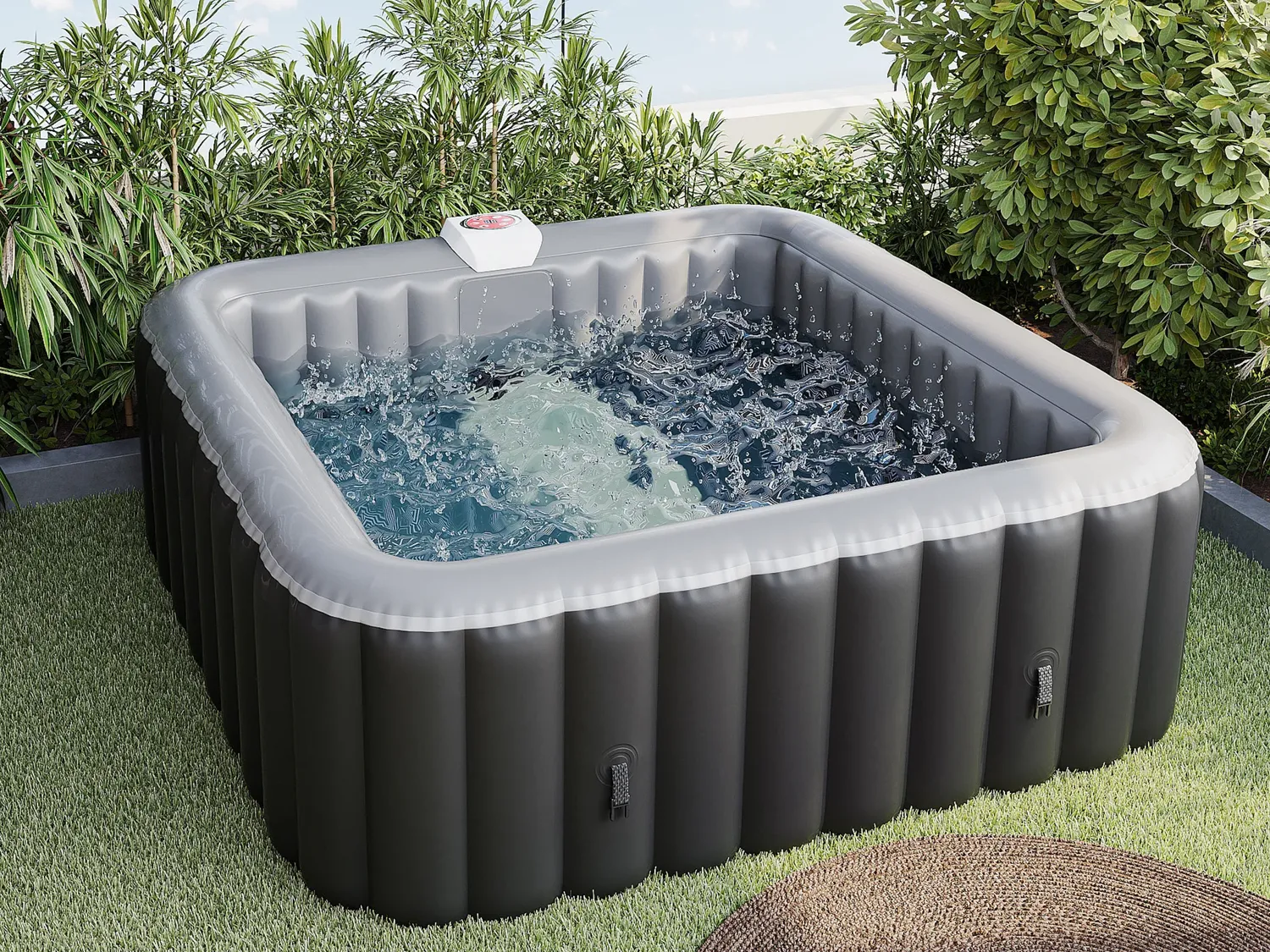
The location directly affects a spa’s monthly energy consumption, as heat loss increases when the pool is exposed to wind, cold and the elements. Placing it in a corner of the terrace, against a wall or under a pergola limits this heat loss and reduces the required heating time.
Outdoors, it is best to choose a sunny spot in winter, but one protected from draughts. On a terrace or balcony, an insulating mat or a high-density foam pad beneath an inflatable spa helps limit heat exchange with the cold ground. In a garden, a small shelter, conservatory or semi-enclosed structure with privacy screens creates a protective cocoon without losing the feeling of bathing in the open air.
Tip 2: Invest in effective insulation
Insulation remains one of the most effective ways to reduce hot tub energy consumption over time, as most kWh are used to keep the water hot rather than to heat it up occasionally. Rigid hot tubs and some semi-rigid models have a shell surrounded by polyurethane foam or insulating panels, which limits heat loss through the sides and underside of the tub.
With an inflatable hot tub, as the PVC or vinyl structure provides less insulation, it is essential to add an insulating base beneath the tub and a thick, perfectly fitting cover. You should also check the cover regularly: if it sags, cracks or allows air to pass around the edges, its effectiveness drops. Replacing a worn component with a suitable model can often significantly reduce a hot tub’s monthly energy consumption, especially outdoors.
Tip 3: Always cover the spa when not in use
The water’s surface is the main area of heat loss, particularly when the hot tub is installed outdoors or in a poorly heated room. As soon as the session ends, replacing the cover should become second nature. A correctly positioned cover prevents cold air from circulating over the hot water, limiting cooling and reducing the need for the heating system to restart.
On a rigid hot tub, a hinged thermal cover, often fitted with handles and sometimes locks, combines insulation and safety, particularly when children are present. On an inflatable hot tub, an internal inflatable lid combined with an external insulating cover creates a highly effective barrier. This protection prevents the temperature from dropping by several degrees. Over the course of a month, this simple habit leads to a noticeable reduction in hot tub energy consumption, without any loss of comfort.
Tip 4: Set the temperature sensibly, especially in winter
Temperature adjustment remains an essential factor in keeping bills under control. The ideal temperature for a spa in winter is between 37 and 38 °C, guaranteeing a comforting sensation of warmth, even in cold weather. However, each additional degree increases consumption, as the difference between the water temperature and the air temperature becomes greater.
For regular use, it is sensible to keep the water at around 35 °C during milder periods, then raise it 1 to 2 hours before your session, allowing the heater time to reach the desired setting. In summer, some users are content with 32 to 34 °C to enjoy a more refreshing soak, which correspondingly reduces the monthly energy consumption of a hot tub. If you are away for more than a few days, lowering the temperature to around 25 °C offers a good compromise between energy savings and protection against frost, especially for a hot tub installed outdoors.
Tip 5: Avoid turning the spa off completely between closely spaced sessions
With electricity prices rising, it may be tempting to switch off the hot tub after each use. However, this strategy is not always the most cost-effective. Heating water that has lost several degrees often requires more energy than keeping it at a moderate, stable temperature.
If you use your spa several times a week, it is best to keep it in maintenance mode, with the temperature set 2 to 3°C below your usual comfort temperature. Before your session, simply raise the temperature to reach the desired warmth again. This method limits extreme heating cycles, which are particularly energy-intensive, and reduces wear on the components.
If you only use the pool once every two weeks, a more substantial reduction, or even an extended shutdown with draining, may be considered, especially for an inflatable spa set up only during the warmer months.
Tip 6: Adjust the filtration duration and schedule
Filtration ensures clear, healthy water, but it comes at an energy cost. The filtration pump runs for several hours a day, which affects a hot tub’s monthly energy consumption. On most models, the daily filtration duration can be configured, allowing you to adapt the schedule to your usage.
For a spa used daily and kept at a high temperature, around 8 hours of filtration per day, spread across several periods, offers a good balance between water cleanliness and reasonable consumption. For more occasional use, between 4 and 6 hours is sufficient, provided you keep an eye on the appearance of the water and its chemical balance (pH, sanitisation). Adjusting in 30-minute increments makes it possible to find the minimum effective duration for your setup, without overconsuming or compromising hygiene.
Tip 7: Regularly maintain the filtration system
Regular maintenance contributes both to comfort and energy savings. A clogged filter restricts water circulation, forcing the pump to run for longer to achieve a comparable result. Over time, this increases both the spa’s energy consumption and the risk of premature failure.
Rinse the filter cartridge under running water several times a week, especially during periods of intensive use. When the filter remains stained, becomes misshapen or has crushed folds, replace it without delay. On a rigid spa, remember to clean the jets, skimmers and areas where deposits may accumulate. Water with a properly balanced pH, neither too acidic nor too alkaline, reduces limescale formation and makes the filter’s job easier. This allows you to leave longer between complete drainings and refills, which themselves consume energy to heat the entire volume of water.
Tip 8: Adjust the settings to the type of spa (inflatable, rigid, semi-rigid)
Not all hot tubs perform the same way in terms of energy efficiency. The right settings vary depending on whether it is an inflatable hot tub, a semi-rigid hot tub or a rigid hot tub. A 4-person inflatable hot tub uses several kWh per day on average, but its temporary installation and flexible structure make it suitable for seasonal use, from spring to autumn. It is wise to place it in a sheltered area and monitor the temperature closely to limit spikes in consumption.
The better-insulated hard-shell hot tub remains more suitable for year-round use, including outdoors. Its thicker shell retains heat more effectively, reducing the monthly energy consumption of a hot tub once the operating temperature has been reached. Many models offer “eco” modes, weekly schedules and, in some cases, remote control via an app, which is useful for planning sessions in advance and avoiding heating the hot tub when you are away. Meanwhile, the semi-rigid hot tub, with its reinforced yet lightweight structure, represents an appealing compromise. It offers better heat retention than an inflatable hot tub while remaining easier to install than a built-in hard-shell hot tub.
To take advantage of these benefits, it makes sense to opt for a rigid spa, whose insulated structure and programmable functions often make it possible to optimise electricity consumption.
Tip 9: Make the Most of Off-Peak Hours and Tariff Options
The overall cost of using a hot tub each month depends as much on the number of kWh consumed as on the kWh tariff. If you have a contract with peak and off-peak hours, making use of these time periods is one of the simplest tips to put into practice without compromising your comfort.
Schedule the main heating and part of the filtration during off-peak hours. Spas equipped with an advanced control panel allow you to set the desired operating periods. On a simpler model, using a smart plug or a timer compatible with the spa’s power requirements may be a solution, provided that electrical standards are observed and a residual-current device is fitted as required. Within just a few weeks, this discreet optimisation can already reduce the annual bill, particularly for a spa that is used regularly.
Tip 10: Monitor your consumption to adjust your habits
To optimise the consumption of a hot tub over the long term, it is better to rely on concrete data rather than simple impressions. Installing a wattmeter or an energy-monitoring module on the hot tub’s power supply line allows you to measure the kWh consumed each day, then compare the actual impact of your settings.
You can test different strategies: lower the set temperature, reduce the filtration time, adjust the heating schedule, improve insulation or use the cover more often. After a few weeks, the readings show which actions have had the most significant effect on a hot tub’s monthly energy consumption. This approach helps you find the ideal balance between bathing comfort, energy costs and environmental responsibility.
