
Corner sofa: how to choose the right one?
A true cornerstone of interior design, the corner sofa transforms a living room into a space that is both welcoming, well-structured and comfortable. Its distinctive configuration makes it possible to optimise floor space while creating a generous relaxation area. Yet behind its apparent simplicity lie numerous decisive criteria: orientation, dimensions, features and materials.
A considered choice ensures not only a cohesive aesthetic result, but also pleasant everyday use for many years to come.
Understanding the different corner sofa configurations
The wide range of models available means it is important to understand the possible configurations before making a decision. Each type meets a specific need and is suited to a particular kind of space.
Right- or left-hand corner sofa: a strategic orientation
The choice between a right- or left-hand corner sofa is based on precise layout considerations. It is not merely an aesthetic detail, but a major functional criterion. When you are facing the sofa:
- Right angle: the meridian is on the right
- Left angle: the meridian is on the left
This choice directly affects movement around the room. In a through lounge, the wrong orientation can block a passageway or throw the layout off balance. For example, in a room with an entrance on the left and a clear wall on the right, a right angle keeps the access clear while making the most of the space.
In some cases, a reversible model offers a flexible solution. It allows you to change the orientation as your interior evolves or if you move house in the future.
Sofa with chaise longue: an integrated relaxation area
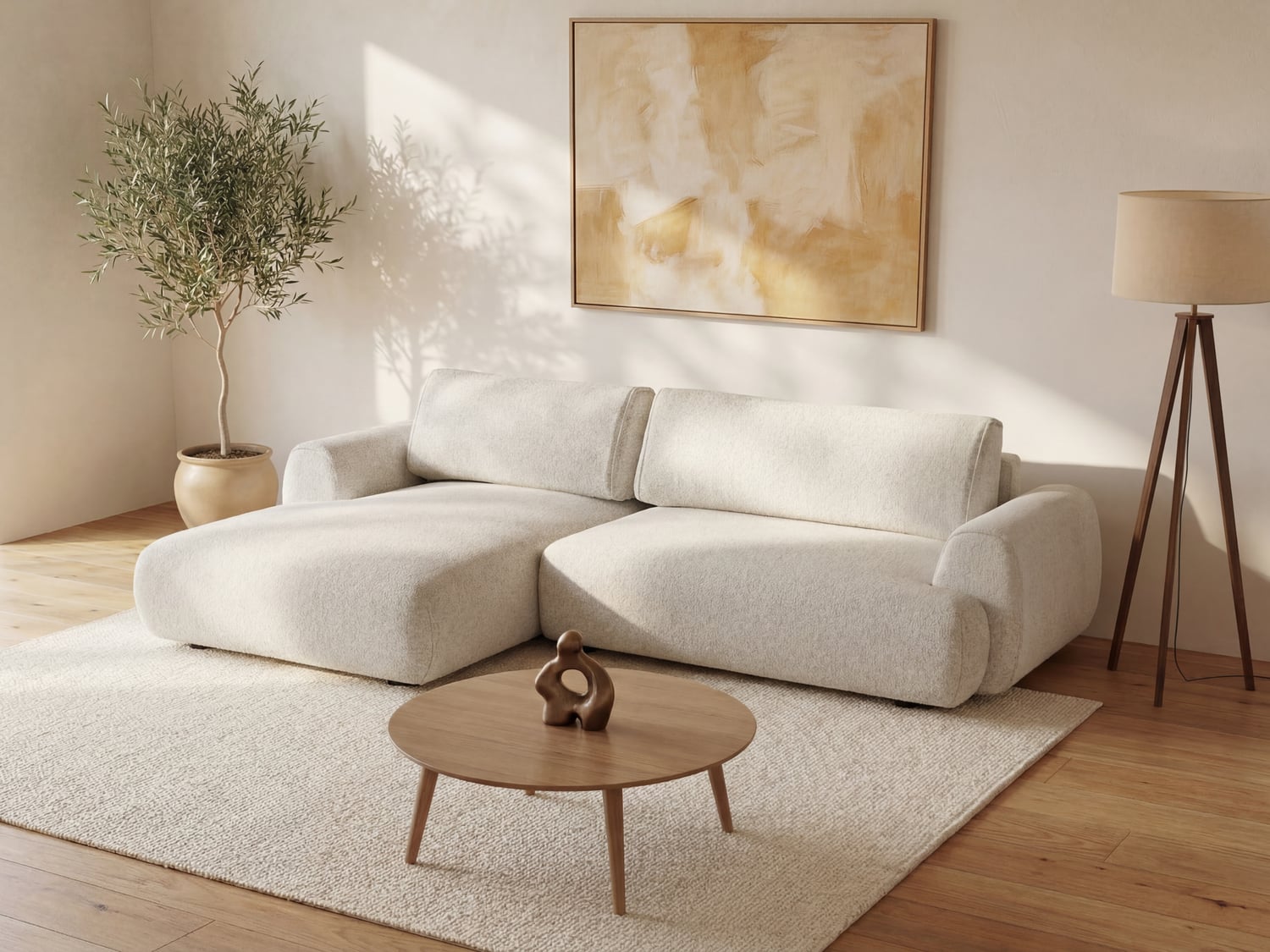
The sofa with chaise longue offers superior comfort by allowing you to stretch out your legs effortlessly. This type of configuration effectively replaces a recliner or a footstool, while maintaining a cohesive look in the living room.
A chaise longue is generally between 140 and 180 cm long, with a seat depth often greater than that of the rest of the sofa. This feature makes it an ideal space for prolonged relaxation: reading, napping or watching films.
In a household of two to four people, this format accommodates everyone without multiplying the number of seats.
Panoramic sofa: a solution for large spaces
The panoramic corner sofa, often U-shaped, is designed for spacious rooms. With an overall length that can exceed 350 cm, it structures large living rooms and encourages convivial moments. In a living room of over 35 m², it becomes a true architectural feature. This type of sofa allows you to:
- Seat several people without compromising on comfort
- Create a central space in an open-plan room
- Replace several pieces of furniture (sofa + armchairs)
Choosing the right dimensions for a corner sofa
The dimensions of a corner sofa directly affect the visual balance and practicality of your living room. An incorrectly proportioned model can quickly become overwhelming or, conversely, seem insignificant.
Standard dimensions and precise markers
To make the right choice, it is helpful to rely on concrete measurements:
- Total length: 240 to 320 cm for a standard model
- Chaise longue: 140 to 180 cm
- Seat depth: 55 to 65 cm (up to 70 cm for a lounge-style comfort)
- Seat height: 40 to 45 cm
- Total backrest height: 80 to 100 cm
A 280 cm sofa is perfectly suited to a 20 to 25 m² living room. For rooms under 15 m², it is preferable to stick to around 220 to 250 cm.
Calculate the required space
Beyond the dimensions of the sofa, you need to allow for the space around it to ensure smooth movement, easy access to the other furniture and a pleasant sense of spaciousness in the living room :
- Minimum passageway: 60 cm
- Coffee table distance: 40 to 50 cm
- TV viewing distance: 2.5 to 3 m
In a 4 × 5 m living room, a 260 cm corner sofa positioned as a divider between two areas helps structure the space while maintaining a smooth flow.
The handy features not to overlook
Some models feature options that considerably enhance ease of use and space optimisation, transforming the sofa into a truly multifunctional piece suitable for both small and large living rooms.
Convertible corner sofa: smart dual-purpose use
The convertible corner sofa meets a common need in modern homes: having an extra sleeping area without sacrificing space. The opening mechanisms vary:
- Pull-out drawer: simple and quick
- Rapido system: opens without removing the cushions
- Trundle mechanism: discreet and compact
Sleeping dimensions affect comfort:
- 120 × 190 cm: occasional sleeping
- 140 × 200 cm: regular sleeping
- 12 to 14 cm mattress: comfort equivalent to a bed
In a studio flat or an apartment without a guest bedroom, this type of sofa becomes indispensable.
Corner sofa with storage compartment: maximise storage
The corner sofa with storage compartment is a particularly practical solution for smaller spaces. The storage compartment, often concealed beneath the chaise longue, provides a significant amount of storage space. It allows you to store a significant volume of items, making it ideal for putting away duvets and pillows, keeping throws and cushions used every day together, and setting aside seasonal clothing that would otherwise clutter the wardrobes. In an urban flat, this type of feature is a useful alternative to an additional storage unit.
Average dimensions:
- Length: 120 to 160 cm
- Width: 60 to 80 cm
- Depth: 20 to 30 cm
Choosing the right coating: aesthetics and durability
The upholstery affects both the appearance and the sofa’s resistance to everyday use, while directly determining how easy the model is to maintain and how long it will last. A textured fabric, smooth leather or deep-pile velvet does not create the same visual impression or react in the same way to friction, stains or natural light. Taking the time to compare the materials, their feel, thickness and care requirements makes it possible to choose a corner sofa that remains elegant over the years, without becoming misshapen or fading prematurely.
Fabric: versatility and ease of care
The fabric stands out for its wide variety of textures, colours and finishes, making it easy to adapt the corner sofa to any interior style, from the most understated to the boldest.
Synthetic fibres such as polyester offer excellent stain resistance and durability, while maintaining an impeccable appearance even with daily use. This type of upholstery is particularly suitable for families with children, pet owners or any household where the sofa is used for several hours a day. Some fabrics also benefit from water-repellent or stain-resistant treatments, which delay the penetration of liquids and make cleaning easier, thereby extending the sofa’s lifespan and preserving its original appearance for longer.
Leather: elegance and longevity
Leather adds a premium dimension and immediately gives the corner sofa character, thanks to its unique feel and elegant visual appearance. Its natural resistance to rubbing makes it a durable material, capable of retaining its good shape for more than ten years when properly maintained. However, it does require a few regular care steps, such as applying specific products to nourish the material and prevent it from drying out.
Leather remains susceptible to scratches and marks left by sharp objects or animal claws, but over time it develops a natural patina that enhances its charm and gives it an authentic, warm appearance.
Velvet: a bold decorative touch
Velvet is appealing for its rich visual appearance, its softness to the touch and the way it catches the light to create subtle highlights. This material immediately adds depth to the room and gives the corner sofa a strong decorative presence, even in a living room with clean lines. It fits perfectly into a contemporary interior, where it creates an elegant contrast with more raw materials such as metal or wood, naturally finds its place in vintage décor that celebrates sumptuous materials, and pairs beautifully with a living room featuring bold colours, enhancing deep shades such as midnight blue, forest green or burgundy.
Seating comfort: a key criterion
Comfort relies on technical elements that are often invisible, but essential. It depends as much on the quality of the foam as on the type of suspension and the shape of the backrest, which must support the body without causing tension. A corner sofa that is well designed provides even support, whether you are sitting upright to chat or more relaxed, stretched out on the chaise longue.
- Foam density : it determines firmness and durability. High-resilience foam offers an excellent balance between softness and support.
25 kg/m³: occasional use
30 to 35 kg/m³: everyday use
35 kg/m³ and above: firm, long-lasting support
- Suspension systems : they ensure long-lasting support. A quality sofa often combines several technologies to guarantee stable, comfortable seating.
Elastic straps: flexible comfort
Zigzag springs: good balance
Pocket springs: precise, long-lasting support
Match the style to your interior
The corner sofa should blend naturally into your decorative scheme, respecting the room’s overall atmosphere and the materials already present. Its design, colour and upholstery should complement the flooring, walls, furniture and accessories to create a cohesive whole rather than an isolated element. By choosing a model whose lines, tones and finishes extend the existing style, the corner sofa becomes a true visual thread that harmonises the living room and enhances the character of your interior.
- Styles and harmonisation : each style has its own characteristics
Scandinavian : light wood, clean lines, soft tones
Contemporary: geometric shapes, neutral colours
Industrial: leather, metal, dark shades
Classic: elegant curves, textured fabrics
- Impact of colours : the choice of shades influences the atmosphere
Light colours: a sense of space
Dark colours: structuring effect
Neutral tones: decorative versatility
A quality corner sofa relies on a solid design and durable materials that can withstand everyday use without becoming misshapen or deteriorating too quickly. When making your purchase, it is therefore essential to consider what lies beneath the upholstery as much as the aesthetics: a solid wood or reinforced plywood frame, sturdy joints and an abrasion-resistant covering are all genuine guarantees of longevity. A warranty of at least two years also demonstrates the manufacturer’s reliability and confidence in the product. By bringing these criteria together, you are investing in a model that retains its comfort, structure and appearance for 8 to 12 years, even with intensive use, and that continues to complement the changing style of your interior without compromising on quality.
