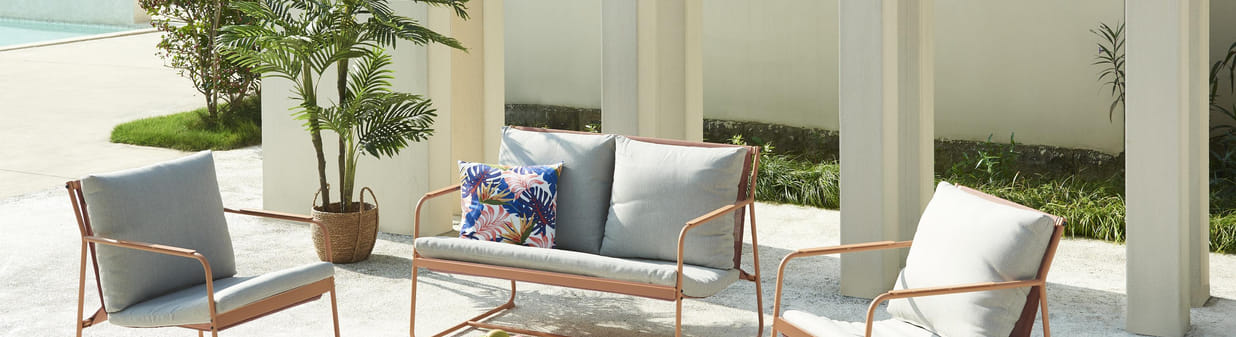
Garden furniture guide: wood, aluminium, plastic & woven resin
A garden furniture set is much more than just a collection of outdoor seats and tables. It is the heart of sunny days, the place where we share summer meals, savour a morning coffee on the terrace, and finally enjoy a well-deserved break after a long day. But for these moments to remain pleasant year after year, choosing the right material is essential.
Wood, resin, aluminium, steel… Every material has its advantages, but also its constraints. A wooden set can be elegant and warm, but without maintenance, it risks turning grey and losing its radiance. Resin is easy to live with, but some low-end models can age poorly. Aluminium is modern and rust-resistant, but depending on exposure, it can quickly become a real radiator in the middle of summer. As for steel, it is robust but requires an effective anti-corrosion treatment to prevent it from turning into a rusty piece of art.
In short, choosing your garden furniture is not just a matter of taste; it is also a question of practicality and durability. After all, nobody wants to invest in furniture that won't even last the summer or that requires more maintenance than a botanical garden.
We invite you to review the most popular materials to help you find the one that matches your lifestyle and your environment. Because a good choice ensures you can fully enjoy your exterior without any unpleasant surprises.
Criteria for choosing the right material
Choosing the material for an outdoor lounge set should not be taken lightly. Beautiful outdoor furniture is good, but a set that stays beautiful and functional for several years is even better. Here are the main criteria to consider before making your choice.
Weather resistance: furniture that braves the seasons
A garden furniture set is on the front line against the whims of the weather. Burning sun, pouring rain, winter frost, or persistent humidity... Not all materials react the same way to these conditions. Some, like wood, need special attention to preserve their appearance and solidity, while others, like aluminium or resin, are specially designed to withstand climatic aggression without losing their radiance.
Choosing the right material is a bit like choosing the right sun protection: you don't want to end up with a piece of furniture that degrades at the first rainfall or cracks after a harsh winter! It is therefore essential to take into account the specificities of each material to guarantee the aesthetic appeal of your outdoor furniture throughout the seasons.
- Facing the sun: Certain materials, like aluminium or resin, resist UV rays well and fade very little. Wood, on the other hand, can turn grey under the effect of the sun unless it is treated or maintained regularly.
- Facing rain and humidity: Untreated steel can rust, while certain woods (like pine) can warp or swell over time. Conversely, resin and aluminium fear neither water nor humidity.
- Facing frost and cold: Plastic can become brittle with frost, and some woods can crack. Aluminium and resin remain top performers in winter, provided they are well protected.
💡 Good to know: To prolong the lifespan of your garden set, it is always best to cover it or bring it indoors during winter, regardless of the material chosen.
Durability and longevity: a long-term investment
Certain materials, naturally more durable than others, make it possible to extend the life of your furniture, even after several seasons spent under the sun, rain, and wind. Materials like galvanised steel, wrought iron, or teak are renowned for their robustness and resistance to extreme weather conditions. On the other hand, plastic or certain types of wood can degrade more quickly, requiring more frequent maintenance and, in some cases, faster replacement.
Opting for more durable materials, even if they represent a slightly higher initial investment, will save you a lot of hassle in the long run. You can thus enjoy your garden furniture without having to worry about its quality or appearance for years. A good choice allows you to enjoy your open-air moments without having to replace your furniture every two years!
- The longevity champions: Exotic wood (like teak or eucalyptus), aluminium, and high-end woven resin can easily last a decade without a hitch.
- More fragile materials: Low-end plastic tends to crack or yellow quickly under UV rays. Steel must be treated against rust to remain intact.
Ease of maintenance: because nobody wants to scrub all year round
The time you spend maintaining your garden furniture is time taken away from enjoying your sun lounger and your well-deserved moments of relaxation. Nobody wants to transform their weekend into a cleaning and repair session! Certain materials, like aluminium or woven resin, require minimal maintenance: a simple wipe with a cloth to eliminate dust or a quick clean with soapy water is enough to maintain their radiance. These materials are perfect for those who prefer sipping a cocktail to maintaining their furniture.
- Easy to live with: Aluminium and resin can be cleaned simply with a damp cloth or soapy water.
- Moderate maintenance: Wood requires regular treatment (oiling, staining) to retain its radiance and prevent it from deteriorating.
- Demanding maintenance: Steel can rust if it is not well protected, and wrought iron often requires a coat of paint or anti-rust treatment every few years.
💡 Tip: To limit maintenance, opt for protective covers or store your furniture under shelter when it is not used for a long time.
Aesthetics and style: furniture that blends into your exterior
A garden furniture set must be both functional and pleasant to look at. After all, it is a space where you will spend time, whether for outdoor meals, relaxation moments, or gatherings with friends. It is therefore essential that this furniture meets your practical needs while contributing to the overall atmosphere of your exterior. Each material brings a unique touch to your garden, creating different moods according to your preferences.
- Wood: Ideal for a warm and natural terrace. It blends perfectly with green environments and classic gardens.
- Woven resin: Modern and elegant, it often imites the look of natural rattan while being more resistant.
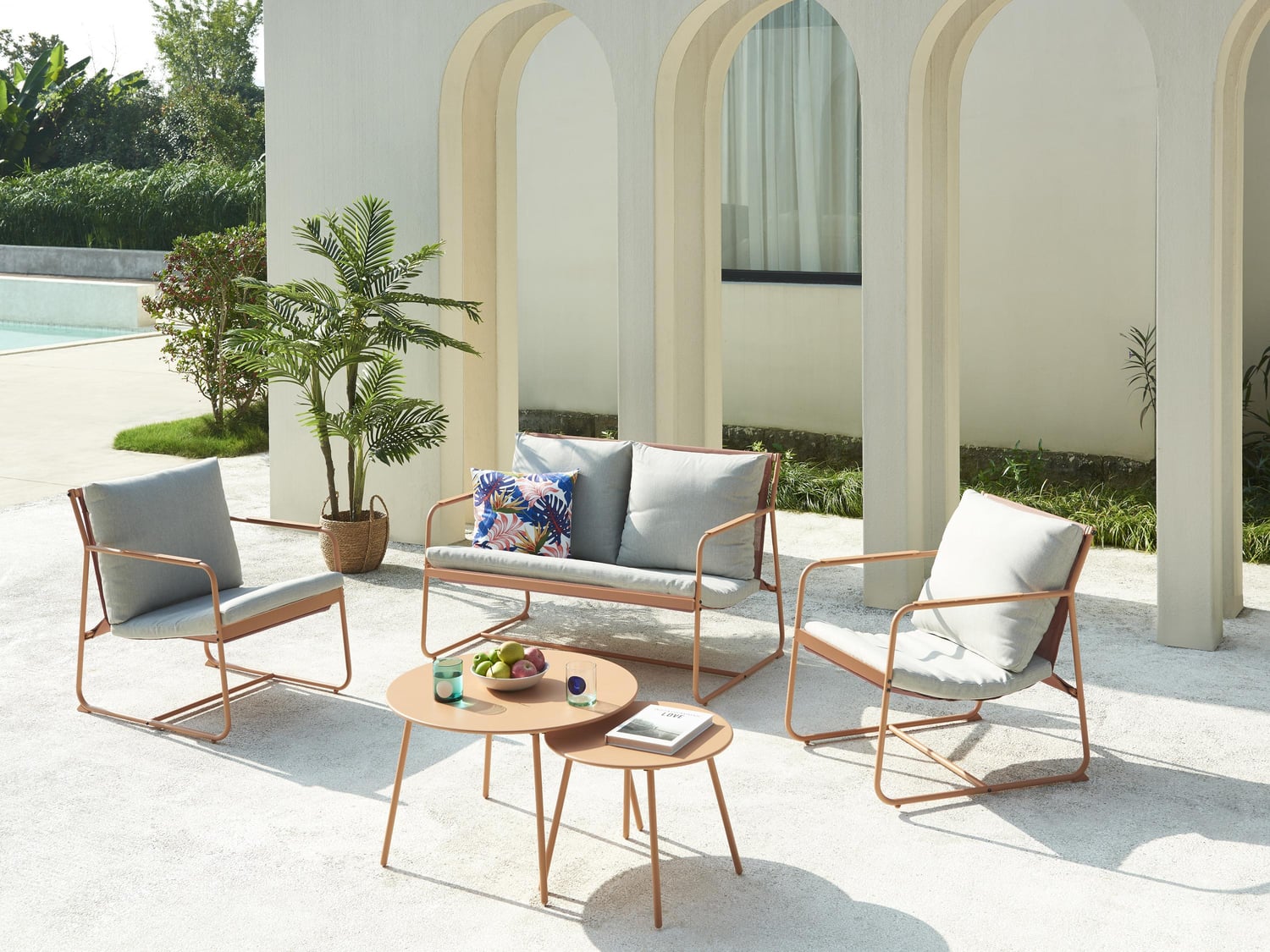
- Aluminium: Perfect for a contemporary and sleek style, frequently associated with sober colours (grey, black, white).
- Steel and wrought iron: Timeless charm, perfect for a romantic or retro atmosphere.
- Plastic: Available in a multitude of colours, it can bring a fun and casual touch, but its finish is generally less high-end.
Budget: finding the right balance between price and quality
The price of a garden furniture set varies enormously depending on the material, manufacturing quality, and brand.
- Entry-level (under £175 / €200): Plastic and certain low-end steel or resin sets. Beware of the lifespan, which can be limited.
- Mid-range (£175 to £700 / €200 to €800): Most aluminium sets, good quality woven resin, and certain treated woods.
- High-end (over £700 / €800): Exotic wood sets, high-end aluminium, and premium woven resin.
💡 Good to know: A cheap garden furniture set may seem attractive, but if it has to be replaced after two years, the investment is not always cost-effective. It is sometimes better to aim for a slightly higher range for better durability.
Comparison of the most popular materials
Wood: warmth and authenticity
Wood is a must-have for garden furniture. Warm and natural, it brings an elegant and timeless touch to any outdoor space. Its unique aesthetic and pleasant feel make it a preferred choice for those seeking furniture that is both robust and refined. Whether paired with modern lines or more traditional designs, wood fits perfectly into all types of gardens, from rustic country styles to the most contemporary spaces.
Thanks to its diversity of species, each piece of wooden furniture tells a different story. Teak, for instance, with its golden hue and natural resistance, is a premium material, while acacia or eucalyptus bring a more rustic yet durable touch. This material has the advantage of patinating over time, taking on deeper shades, which adds even more to its charm.
In addition to its aesthetic appeal, wood is an excellent thermal insulator, offering incomparable comfort even on the hottest days. There is nothing better than settling onto a wooden chair during a sunny afternoon, enjoying its gentle warmth under the sun's rays.
However, to retain all its qualities, a wooden garden furniture set requires regular maintenance. Oiling, varnishing, or painting may be necessary to prevent greying or deterioration under the effect of bad weather. Proper maintenance will allow your wooden furniture to cross the seasons without losing any of its beauty, maintaining its warm and natural look year after year.
Wood, in short, is a true guarantee of quality and elegance. It combines the beauty of nature with robustness, offering furniture that withstands time while remaining aesthetic. However, it is important to give it a little attention to preserve its natural charm and guarantee its longevity.
✅ Advantages of wood
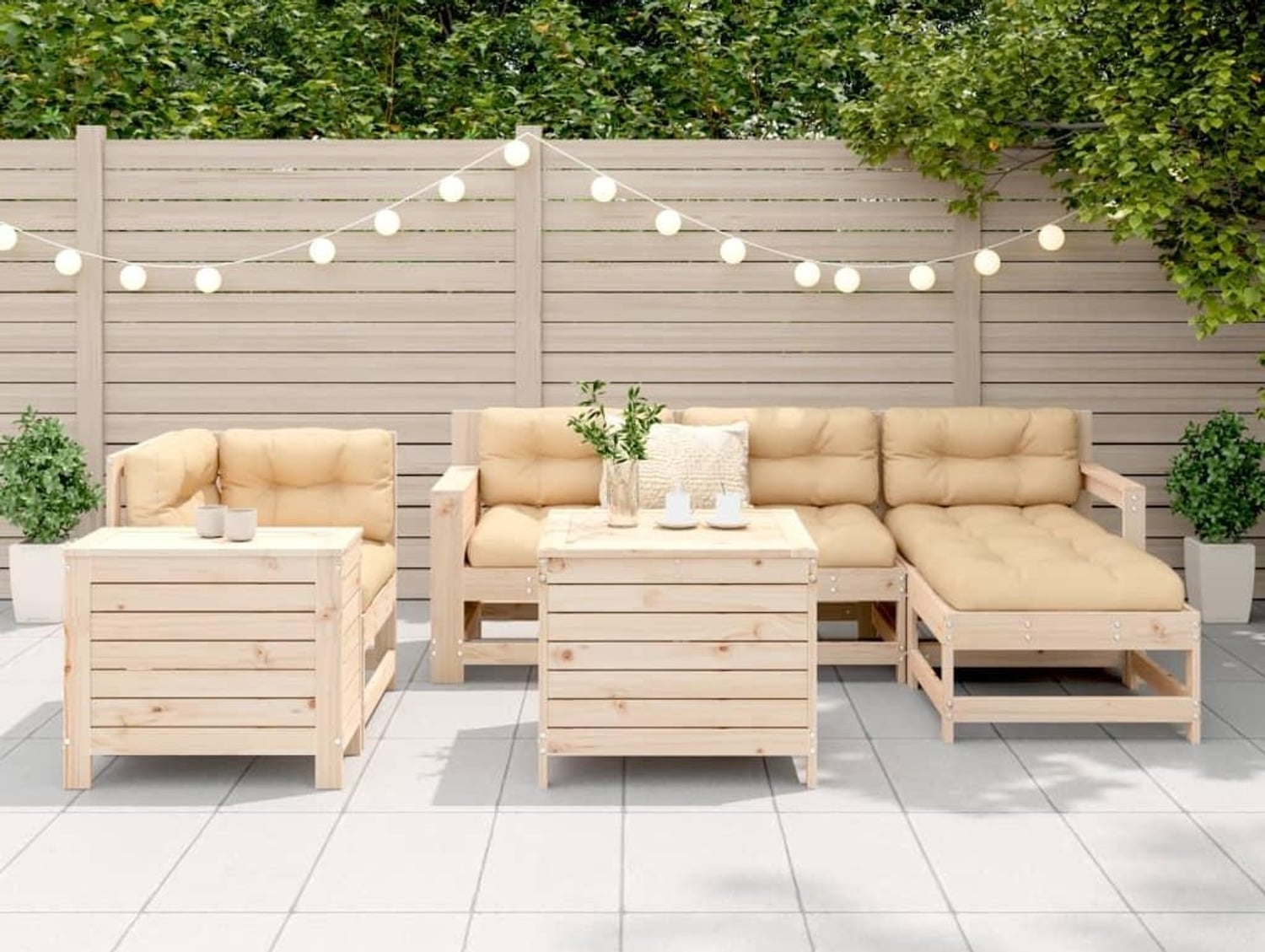
- A natural and timeless aesthetic look: Nothing replaces the warm appearance of wood. It blends perfectly into a green garden, on a stone terrace, or even in a more contemporary setting.
- A robust and durable material: If well maintained, a wooden garden furniture set can last for decades. Hardwoods, like teak or eucalyptus, are particularly resistant to bad weather.
- Pleasant comfort: Unlike metal materials, wood does not heat up excessively in direct sunlight and does not become freezing in winter.
❌ Disadvantages of wood
- Regular maintenance required: Wood needs to be oiled or varnished regularly to retain its radiance and prevent it from becoming dull or grey. Without treatment, it patinates naturally, which may appeal to some but not everyone.
- Risk of warping over time: Under the effect of humidity and temperature variations, some woods can split, warp, or shrink.
- Significant weight: A solid wood set is often heavier than other materials, which can be a disadvantage if you need to move it frequently.
🌳 The best wood species for garden furniture
Not all woods are created equal outdoors. Here are the most recommended for a durable garden set:
- Teak: The king of outdoor woods! Naturally rot-resistant, it withstands humidity, insects, and UV rays without much maintenance. Its only drawback? Its high price.
- Acacia: A good compromise between aesthetics and resistance. It is more affordable than teak and resists bad weather well, but it requires regular oiling.
- Eucalyptus: Solid and ecological, it offers good durability with reasonable maintenance. Cheaper than teak, it nonetheless remains more sensitive to climatic variations.
- Treated pine: A more economical option. It is pressure-treated to resist bad weather, but it remains less durable than exotic woods.
💡 Good to know: If you opt for a wooden garden furniture set, choose FSC or PEFC certified wood, guaranteeing responsible forest management.
A great choice for those who love natural materials and are not afraid to apply a little coat of oil from time to time!
Woven resin: modern and easy to maintain
In recent years, woven resin has established itself as one of the star materials for garden furniture sets. Its elegant appearance, which imitates natural rattan, and its ease of maintenance make it an ideal choice for those seeking furniture that is both stylish and practical. One of the great assets of woven resin is its versatility: it is found in many styles, from the most classic to the most contemporary, and it adapts as well to large spaces as to small balconies. Thanks to its lightweight and weather-resistant properties, woven resin becomes the perfect solution for people who want modern, easy-to-live-with furniture.
Indeed, unlike wood or metal, woven resin fears neither humidity nor UV rays, making it ideal for outdoor environments where furniture is frequently exposed to the elements. Its maintenance is child's play: a simple wash with soapy water is enough to keep it clean and looking like new. This makes it a very popular option for those who prefer to spend their time enjoying their garden rather than maintaining their furniture.
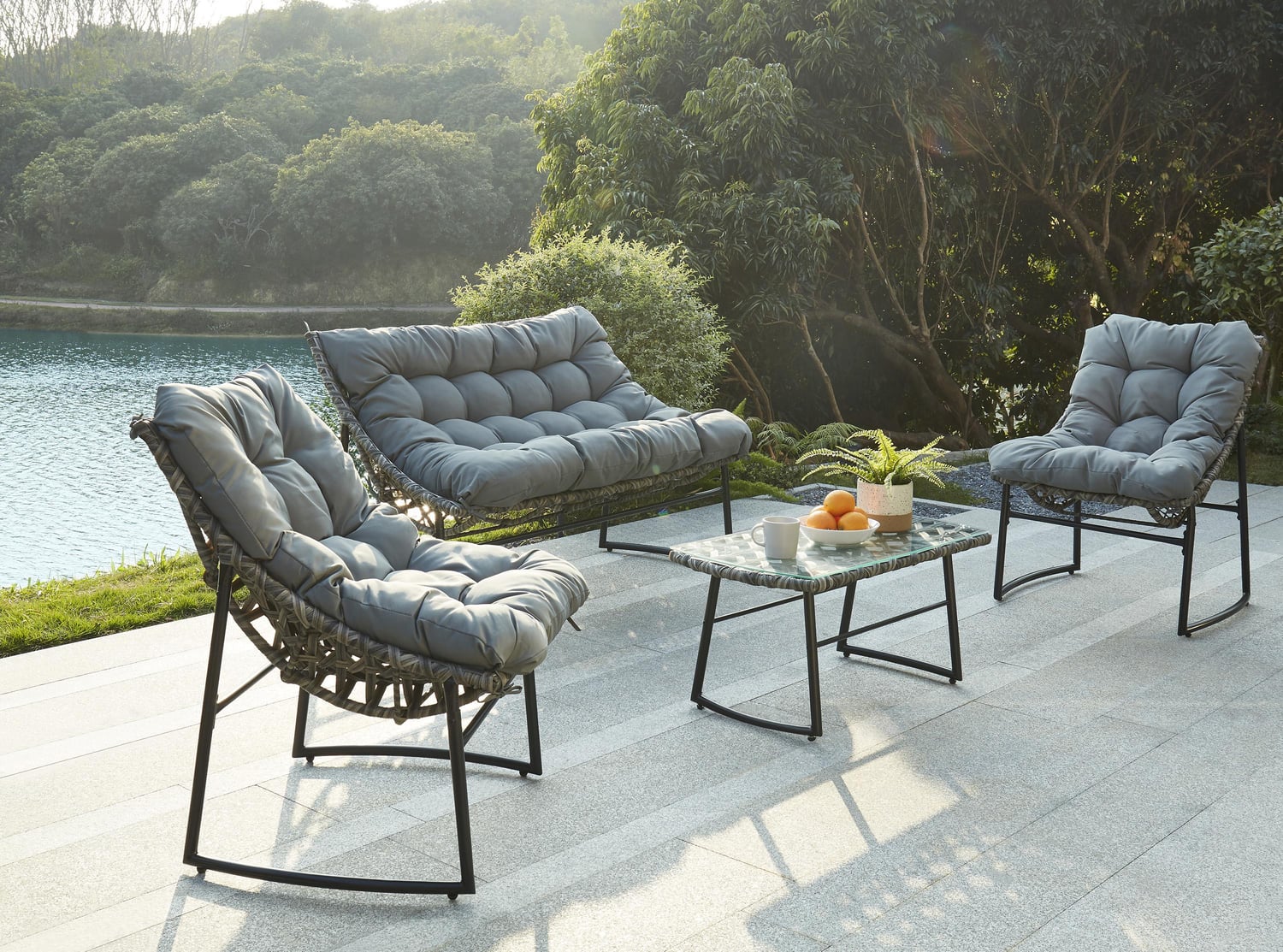
Its woven texture, which perfectly mimics natural rattan, gives a resin garden furniture set a touch of sophistication while remaining light and modern. Available in a varied range of colours and finishes, woven resin can be chosen to harmonise with the atmosphere of any garden, terrace, or balcony. Whether you opt for furniture with clean, contemporary lines or for more classic, rounded models, woven resin adapts to your exterior while sublimating it.
Although woven resin is resistant and practical, it must be kept in mind that its quality can vary. It is therefore essential to check the composition and finishes of the furniture to ensure its long-term durability. Models made from high-quality synthetic resin, such as polyethylene, will offer better UV resistance and greater longevity.
✅ Advantages of woven resin
- Excellent weather resistance: Unlike wood, resin fears neither humidity, UV rays, nor temperature variations. It does not rust, crack, or mold.
- A lightweight material that is easy to move: Unlike wood or wrought iron, woven resin is lightweight, allowing you to easily rearrange your furniture according to your desires.
- A contemporary and elegant design: Its weave brings a sophisticated and natural touch, while easily integrating into all outdoor decoration styles.
- Minimal maintenance: A simple wipe with a sponge or a rinse with a hose is enough to restore its radiance.
❌ Disadvantages of woven resin
- Quality can vary depending on the models: Not all woven resins are created equal. Low-end models tend to degrade quickly, with weaving that cracks or breaks after a few seasons.
- Risk of wear over time: Even though it resists bad weather well, resin can eventually deteriorate under the effect of UV rays or cold, especially if it is of poor quality.
- Less authentic than wood or natural rattan: Although the imitation is often successful, some lovers of natural materials may find its finish less warm.
🔍 Different types of woven resin
There are two main categories of woven resin, which directly influence the quality and durability of the furniture:
- Synthetic resin (polyethylene, polypropylene, PVC): This is the most widespread and resistant. It is designed to be insensitive to bad weather and UV rays. Prefer models made of high-density polyethylene, which offer better longevity.
- Natural resin: Less common, it is made from plant fibres like rattan or wicker. It brings a unique character, but it is much more fragile and requires more extensive maintenance. To be avoided for prolonged outdoor use.
Woven resin is an excellent choice for those who want an aesthetic, lightweight, and easy-to-maintain garden set. It offers a good compromise between style and practicality, provided you choose a quality model.
Aluminium: lightness and modernity
Aluminium is an increasingly popular material for garden furniture sets. Simultaneously lightweight, robust, and rust-resistant, it appeals through its sleek design and ease of maintenance. Perfect for a contemporary exterior, it often combines with other materials like wood or resin for an even more aesthetic result.
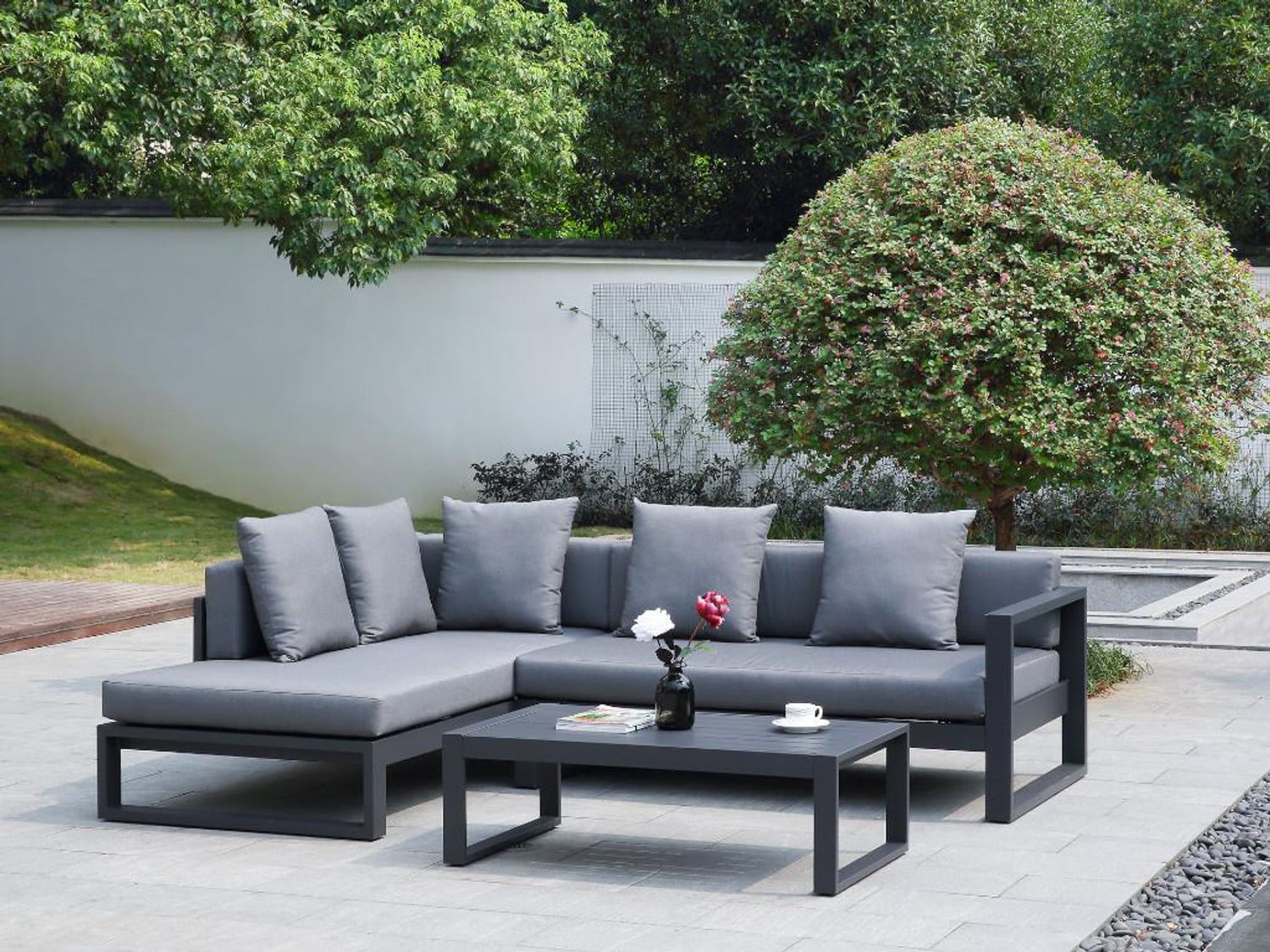
✅ Advantages of aluminium
- Exemplary weather resistance: Unlike steel, aluminium does not rust. It handles humidity, UV rays, and temperature variations very well.
- A lightweight material that is easy to move: Ideal if you like to rearrange your terrace or pack away your furniture in winter without straining your back.
- A modern and elegant design: With its clean lines and often matte or glossy finishes, it fits perfectly into contemporary and minimalist spaces.
- Maintenance reduced to a minimum: A simple damp cloth is enough to remove dust and any traces.
❌ Disadvantages of aluminium
- Can heat up in the sun: In the middle of summer, an aluminium set exposed to direct sunlight can quickly become burning hot, especially if it is dark in colour. Fortunately, this problem is easily solved with cushions or a parasol.
- An environment that can feel cold and impersonal: If you are looking for a warm and natural atmosphere, aluminium alone can seem a bit too industrial. Combining it with wood or resin can be a great solution.
- Variable quality depending on the models: Not all aluminiums are created equal. Some entry-level models can be more fragile and less well protected against scratches and oxidation.
⚖️ Classic aluminium vs. reinforced aluminium
- Classic aluminium: Light and resistant, but can be more sensitive to impacts and scratches.
- Reinforcement (or powder-coated) aluminium: Covered with a layer of special paint that protects it even better against external aggression. More durable, but often more expensive.
💡 Good to know: Always check the thickness of the aluminium structures. A frame that is too thin may be less stable and more sensitive to deformation.
Aluminium is ideal for those seeking a modern, lightweight garden furniture set with no maintenance constraints. Provided you choose the right quality, it offers excellent durability and a contemporary style that adapts to all exteriors.
Steel and wrought iron: robustness and timeless charm
Steel and wrought iron are classic garden furniture materials, known for their robustness and vintage aesthetic. While they have a slightly retro and romantic side, their weight and solidity make them prime allies for those seeking durable furniture. But beware, these materials also have their requirements...
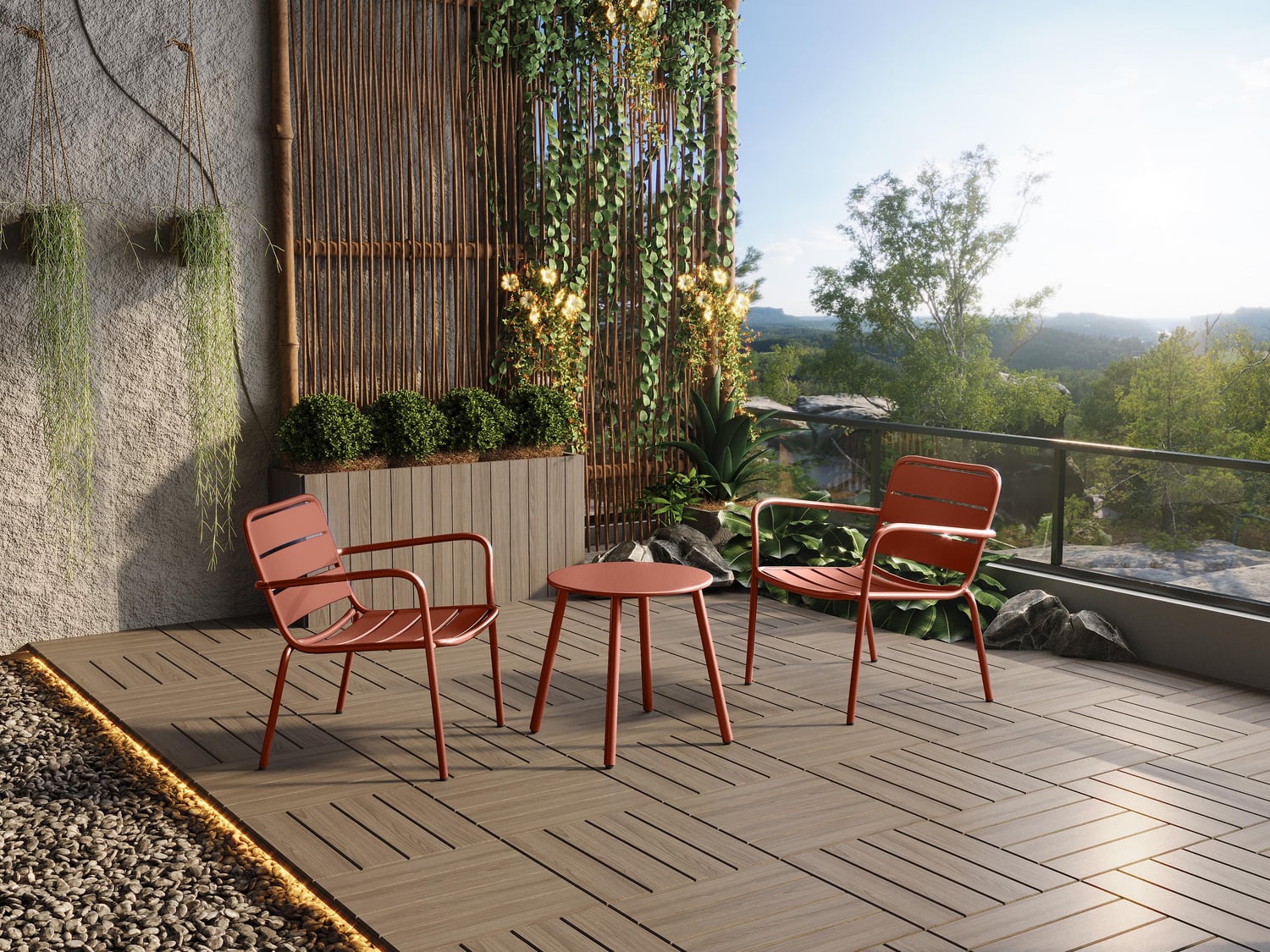
✅ Advantages of steel and wrought iron
- All-weather solidity: If you are looking for a garden set capable of withstanding the weight of years and resisting bad weather, steel and wrought iron are top-tier choices. Their structure is highly resistant, even under heavy loads.
- A classic and refined charm: Wrought iron, with its elegant curves and crafted appearance, gives a romantic edge to your exterior. Steel, on the other hand, can be used in more contemporary or industrial styles.
- Great stability: Due to their weight, steel and wrought iron furniture pieces are generally very stable, even in high winds. If you live in a windy region, this is a significant asset.
❌ Disadvantages of steel and wrought iron
- Sensitive to rust: Steel and wrought iron are vulnerable to rust if they are not properly treated. A coat of paint or a special coating is therefore essential to protect them from humidity and bad weather.
- More demanding maintenance: Although they are robust, these materials require regular maintenance to prevent rust and preserve their appearance. It is necessary to repaint them every few years to guarantee their longevity.
- Significant weight: Their solidity comes at a price: steel and wrought iron furniture pieces are often quite heavy, making them less practical to move.
⚙️ Galvanised steel vs. wrought iron
- Galvanised steel: Galvanised steel has undergone a special treatment to make it more rust-resistant. It is ideal for the outdoors, but pay attention to the quality of the finish. Poorly treated steel risks rusting after a few years.
- Wrought iron: Wrought iron is generally more aesthetic, but it requires a high-quality anti-corrosion treatment. It is often more expensive than galvanised steel, but its crafted appearance gives it an undeniable charm.
💡 Good to know: To avoid rust, opt for a model with an epoxy paint or powder-coated finish, which forms a protective barrier against moisture.
Steel and wrought iron are perfect for those seeking solid, timeless, and refined garden furniture. However, these materials require a bit more maintenance and vigilance against rust. If you are ready to invest time in their care, they will offer your garden an elegant and robust touch.
Plastic: practical and economical
Plastic is a material traditionally dismissed for its somewhat "low-end" side, but in the field of garden furniture, it can prove to be a wise choice, especially for those seeking practical, lightweight, and affordable furniture. Easy to handle and inexpensive, it appeals through its functional side and multiple design possibilities. Although its appearance can sometimes seem less prestigious than wood or metal, modern plastic has evolved significantly and now offers quality and finishes that have nothing to envy from more traditional materials.
One of the main advantages of plastic is its lightness. Unlike materials like metal or wood, plastic furniture is easy to move, which is ideal for people who like to rearrange their outdoor space or who have a narrow balcony. Plastic is also extremely weather-resistant. It does not rust, rot, or warp with humidity, making it a sensible choice for outdoor environments subject to variable weather conditions. A simple clean with water and soap is enough to keep plastic furniture in good condition—an excellent option for those who do not wish to spend too much time maintaining their furniture.
A very versatile material, plastic is available in a vast range of colours, shapes, and styles. Whether you are seeking furniture with a modern, sleek look or something more colourful and original, plastic can be moulded and crafted to suit all tastes. Furthermore, it is often used to reproduce the appearance of other materials like wood or metal, allowing you to benefit from the desired design without the drawbacks of maintenance or weight.
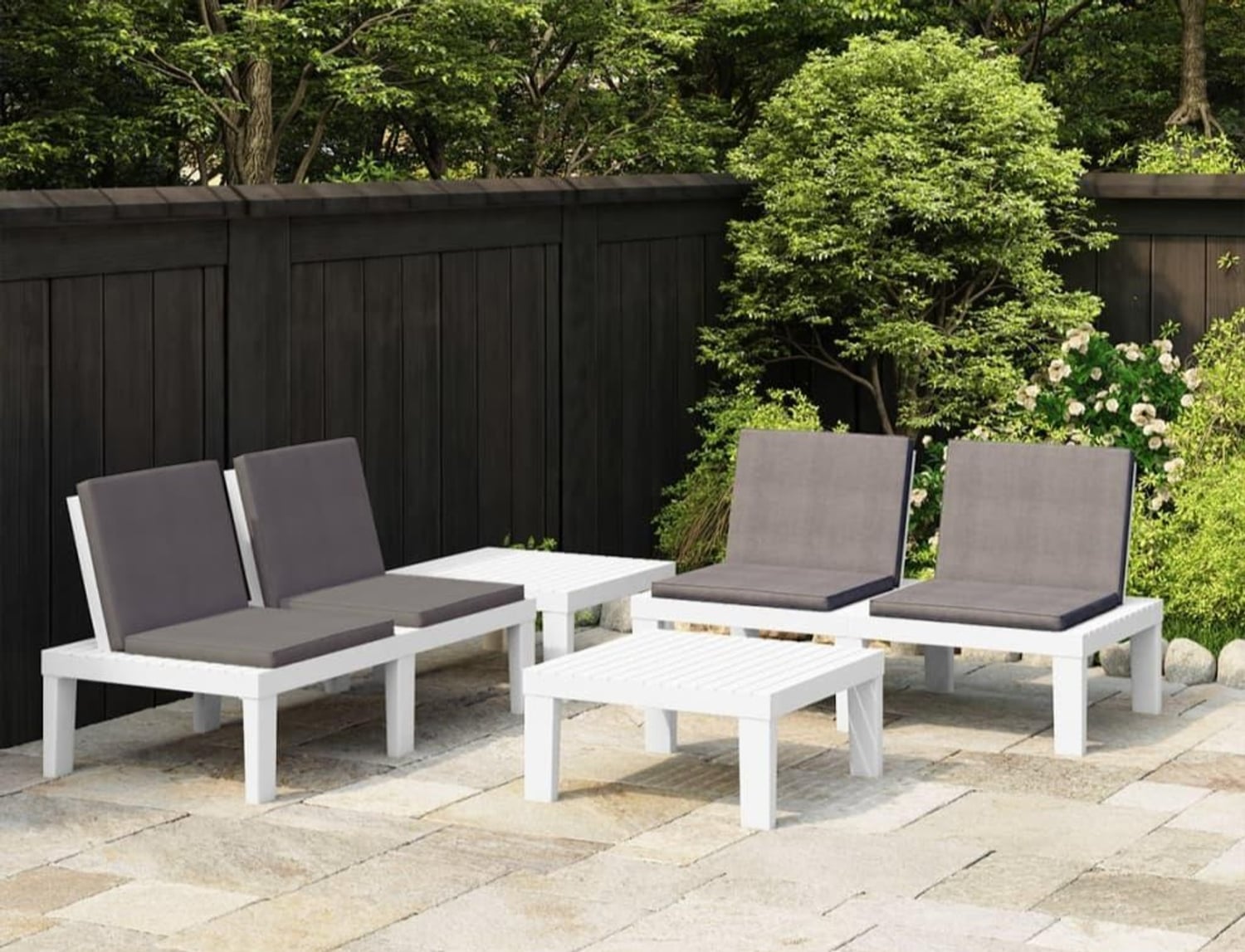
✅ Advantages of plastic
- An affordable price: If your budget is limited, plastic is without a doubt the most economical option. You can equip your entire garden or terrace without breaking the bank.
- Lightness and ease of handling: Plastic furniture is ultra-lightweight, allowing you to move it easily, even if you have a small balcony or a sunny terrace where you must regularly rearrange the furniture.
- Weather-resistant: Plastic is completely waterproof and fears neither rain, humidity, nor even UV rays. It retains its colour and shape for many years without degrading.
- Easy maintenance: A simple wipe with a sponge and a bit of soap is enough to clean plastic. It does not absorb water, which prevents mold or the appearance of stains.
❌ Disadvantages of plastic
- An aesthetic often judged basic: Although plastic is available in a wide variety of styles, it can lack the elegance and authenticity of other materials like wood or metal. Low-end models can look a bit "cheap".
- Less durable in the long term: Although it is resistant, plastic can fade over time, especially if it is exposed to the sun for prolonged periods. It can also become brittle and crack under the effect of frost or impacts.
- Not always ecological: Plastic is not a biodegradable material, and its manufacturing has an environmental impact. However, some manufacturers opt for recycled plastics, which constitutes a better alternative.
🔍 Types of plastic used for garden furniture
- Recycled plastic: Some garden sets are made from recycled plastic, which is a more ecological option. This material is just as resistant and can be as aesthetic as conventional plastic.
- Polypropylene: One of the most widely used plastics for outdoor furniture, it is lightweight, robust, and weather-resistant. Its UV resistance makes it an interesting choice for prolonged outdoor use.
- PVC (polyvinyl chloride): Often used for folding garden chairs and tables, PVC is weather-resistant but can fade over time under the effect of the sun.
💡 Good to know: For a better aesthetic result, choose high-quality plastic furniture or models with finishes imitating other materials, such as wood or metal.
Plastic is an excellent choice if you are looking for economical, lightweight, and easy-to-maintain garden furniture. It is perfect for small budgets or spaces where the furniture is frequently moved. However, if you are looking for high-end design and exceptional longevity, you may need to consider other materials.
The ideal material: the one that supports the seasons as well as your guests
Choosing the right material for your garden furniture set depends on several factors: aesthetics, durability, maintenance, and of course, budget. Every material presents its advantages and disadvantages, and the right choice will vary based on your priorities.
If you seek warmth and authenticity, wood remains a classic and elegant choice but will require regular maintenance. Woven resin, with its modern design and weather resistance, is ideal for those who prioritise practicality. Aluminium offers unparalleled lightness and longevity but can lack a bit of warmth. As for steel and wrought iron, they bring robustness and a timeless charm but demand more sustained maintenance. Finally, plastic is the most economical and easy-to-maintain option, although it sometimes lacks character.
Ultimately, the choice of material will depend on your personal tastes and the use you wish to make of your furniture. Maintenance is often the key to longevity, regardless of the material chosen. It's up to you to make the right choice based on your needs, but also on the atmosphere you want to create in your garden.
So, ready to find the material of your dreams to transform your garden into a corner of paradise? Don't forget: a good garden furniture set is like a good sofa... but in an outdoor version, with a bit more sun and a breath of natural ventilation!