How to choose a greenhouse based on your needs: expert guide
Are you tired of seeing your tomatoes look gloomy at the very first frost? Do your seedlings shiver at the slightest draft, and do your exotic plants already miss their native lands? It might be time to invest in a garden greenhouse! However, faced with the sheer variety of available models—tunnel, glass, polycarbonate, lean-to, or even mini greenhouses—making a choice can quickly become a real headache.
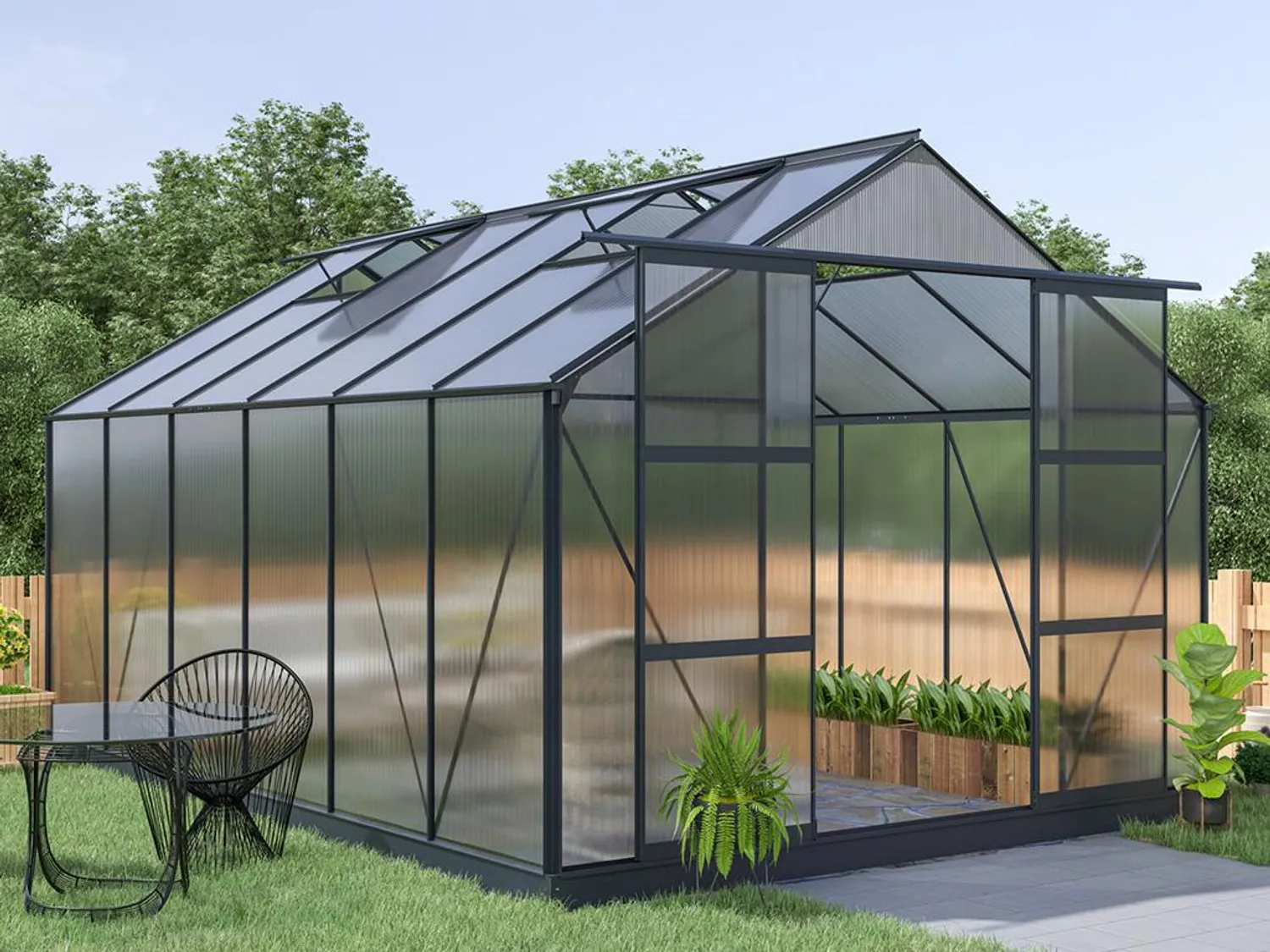
Each type of greenhouse has its own specific features, and it is vital to define your needs clearly before diving in. Should you prioritise a sturdy greenhouse capable of withstanding bad weather or a lighter, more economical structure? A large surface area for a highly productive vegetable patch, or a compact model tailored to small spaces? Climate, budget, and intended use are all key factors to consider to make the right choice.
Let us guide you through the essential criteria for choosing the ideal greenhouse, based on your garden, your crops, and your expectations. Whether you want to overwinter your plants, grow vegetables all year round, or simply give your seedlings a helping hand, you will find all the keys here to invest in the greenhouse that truly fits your needs.
The primary use of the greenhouse
Before jumping into the purchase of a greenhouse, it is essential to define what it will be used for. Will you use it to grow vegetables, protect fragile plants in winter, or experiment with advanced techniques like hydroponics? Each use implies particular requirements in terms of size, ventilation, and insulation.
Vegetable farming: need for space, good ventilation, and sturdiness
If your goal is to grow vegetables all year round, you will need a spacious and well-ventilated greenhouse. Tunnel greenhouses are often preferred for this purpose because they offer excellent value for money and allow you to cultivate over large surface areas.
Points to prioritise:
- Generous headroom: To make working and moving around inside much easier.
- Effective ventilation: (Doors, side vents, or automatic roof vents) to prevent excessive humidity and diseases.
- A weather-resistant structure: Strong enough to withstand wind and bad weather, especially if you live in a storm-prone region.
Overwintering sensitive plants: the importance of thermal insulation
If the main purpose of your greenhouse is to protect your plants from the cold, insulation will be a key criterion. Glass or double-walled polycarbonate greenhouses are ideal for retaining heat and limiting temperature fluctuations.
Essential criteria:
- A good insulating material: Such as multi-wall polycarbonate or tempered glass.
- A lean-to structure: Mounted against a wall of your house, which profits from the residual heat of your home.
- An auxiliary heater: Essential if you are growing tropical or highly fragile plants.
Balcony or small-space greenhouses: compact solutions like mini greenhouses
Not everyone is blessed with a large garden. If you only have a balcony or a terrace, suitable solutions exist to grow your seedlings or protect a few plants over the winter. Mini greenhouses, often made of plastic or polycarbonate, are a great alternative to maximise a small space.
Fundamental points:
- A compact and modular format: (Shelves, cold frames, or small lean-to styles).
- Easy and removable installation: Allowing you to adapt to the changing seasons.
- Excellent exposure to light: Which is vital in restricted spaces.
Experimentation (hydroponics, permaculture): greenhouses adapted to advanced techniques
For passionate gardeners who want to take things a step further, certain greenhouses are specially designed for techniques like hydroponics or permaculture. A bioclimating greenhouse, for instance, can help optimise energy consumption while respecting a natural ecosystem.
Aspects to prioritise:
- A custom design: Tailored to the specific requirements of your crops.
- Optimised water and heat management: To minimise environmental impact.
- Extra equipment: Such as tanks for aquaponics or temperature sensors to automate specific tasks.
Climate and local weather conditions
The climate in your region plays a major role in choosing your greenhouse. A greenhouse poorly suited to local weather conditions can quickly become inefficient or even deteriorate prematurely. It is therefore essential to opt for a model designed to withstand the elements while guaranteeing an optimal environment for your crops.
🍃 Windy zones: prioritise a polycarbonate or lean-to greenhouse for extra stability
If you live in an area where the wind blows hard, it is imperative to choose a sturdy greenhouse that is well-anchored to the ground. Lightweight models, like plastic-sheened tunnel greenhouses, risk being damaged or even torn away during storms.
Suitable solutions:
- Polycarbonate greenhouses: More resistant to wind gusts than glass greenhouses, they offer excellent durability while maintaining good insulation.
- Lean-to greenhouses: Secured against a wall of your home, they are naturally shielded from the wind and benefit from the heat accumulated by the house.
- Solid anchoring: Whichever model you choose, ensure it is firmly secured to the ground with ground pegs or concrete foundations.
❄️ Cold zones: opt for a well-insulated greenhouse (double-wall glass, polycarbonate)
In regions with harsh winters, a poorly insulated greenhouse will lead to significant heat loss, which can hinder plant growth or make installing a heater mandatory.
Appropriate solutions:
- Double-wall glass greenhouses: They offer excellent thermal insulation and help retain the sun's heat for longer.
- Multi-wall polycarbonate greenhouses: This material represents a great compromise between insulation and sturdiness, as it retains heat better than single-layer glass.
- Ground mulching and thermal curtains: To limit heat loss during chilly nights.
☀️ Hot zones: necessity of good ventilation and protection against overheating
Conversely, if you live in a region where summer temperatures soar, the main challenge will be to avoid overheating inside the greenhouse, which could scorch your crops.
Adequate solutions:
- Greenhouses with wide openings and adjustable vents: Privilege a model with side windows and roof skylights to allow proper air circulation.
- Shading nets or reflective panels: These devices limit direct exposure to the sun and prevent excessive temperatures.
- Automatic watering or misting systems: They cool down the ambient air and prevent water stress in your plants.
Size and available space
A greenhouse must be chosen based on the space you have available, but also on your gardening ambitions. A greenhouse that is too small risks quickly becoming insufficient, while an overly large greenhouse can be difficult to heat and maintain.
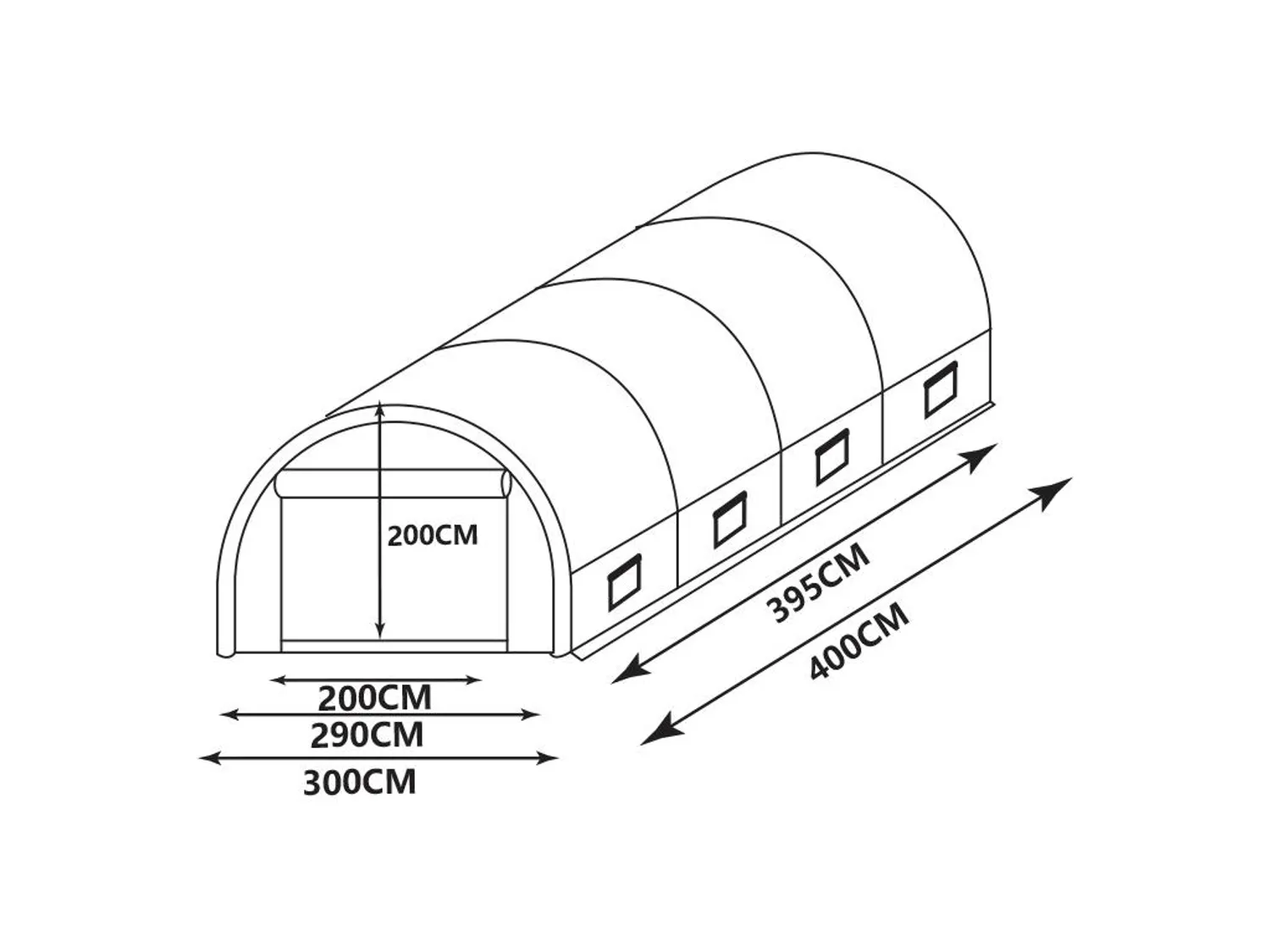
Large greenhouses (>10 m²): for regular gardeners or diversified crops
Large greenhouses are ideal for those who want to grow crops all year round or experiment with different plant varieties. They offer sufficient space to work comfortably and allow you to organise multiple growing zones (seedlings, mature plants, sensitive varieties, etc.).
✅ Advantages:
- Sufficient space to grow several types of plants simultaneously.
- Option to install extra equipment (irrigation systems, heating, staging shelves).
- Enhanced working comfort thanks to generous headroom.
❌ Inconvenients:
- Demands more maintenance and setup.
- Higher upfront cost for purchase and installation.
- Requires a large enough space in the garden.
Medium greenhouses (5-10 m²): a great compromise between footprint and productivity
If you have a medium-sized garden, a 5 to 10 m² greenhouse represents an excellent compromise. It offers a highly interesting growing area without taking over the whole garden and can suit vegetables and ornamental plants alike.
✅ Advantages:
- Encompasses enough space for a family vegetable patch.
- Easy to maintain and manage in terms of temperature and humidity.
- Suitable for most climates with proper ventilation.
❌ Inconvenients:
- Can become tight if you wish to grow crops in massive quantities.
- The interior layout must be meticulously optimised to maximise space.
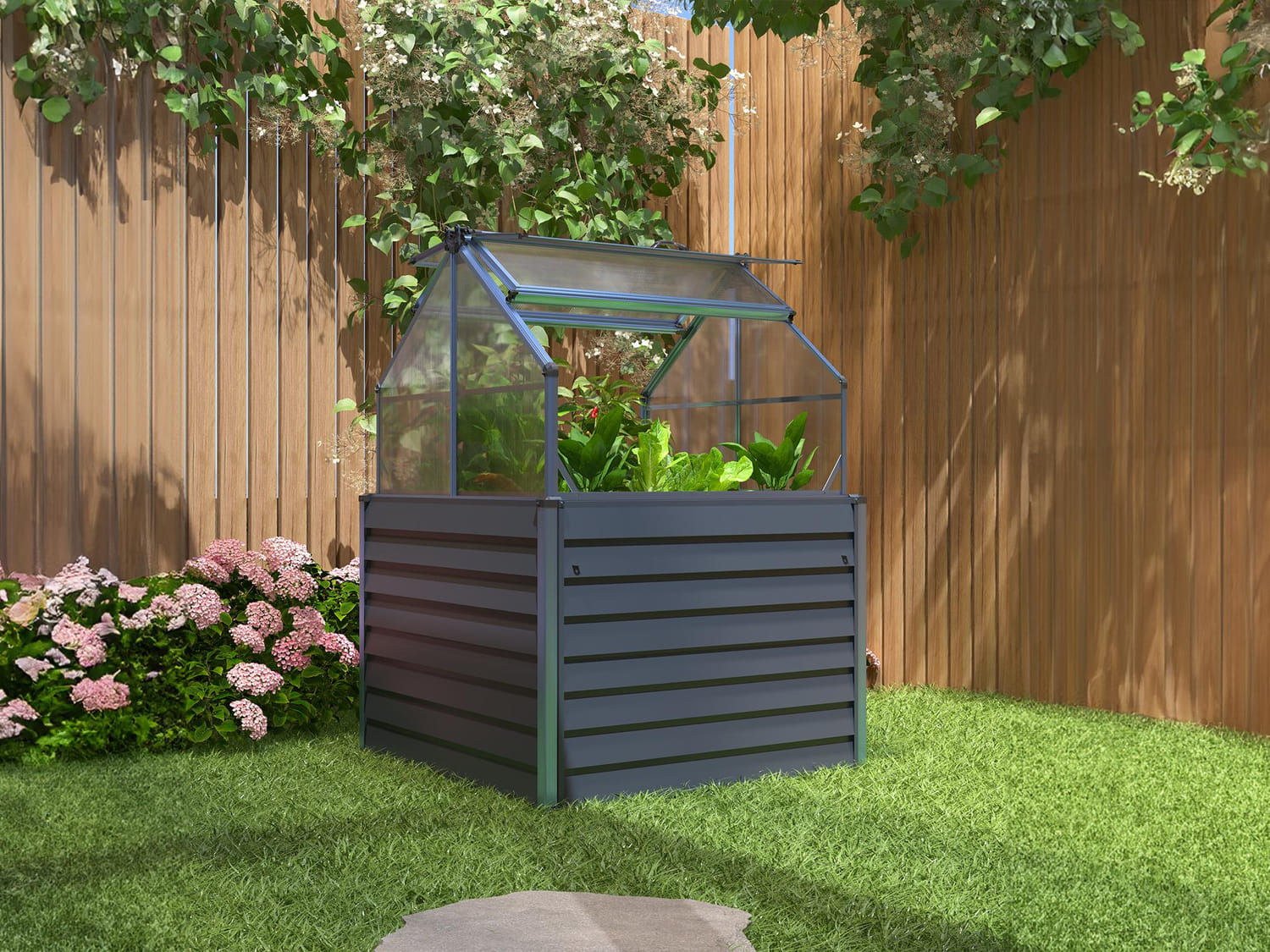
Mini greenhouses and lean-to greenhouses: adapted to small gardens and terraces
For gardeners with limited space, compact solutions exist that allow you to enjoy the benefits of a greenhouse without invading the entire garden.
✅ Mini greenhouses:
- Ideal for forcing seedlings and protecting small plants.
- Inexpensive and very easy to move around depending on the season.
- Perfectly suited to balconies and small terraces.
✅ Lean-to greenhouses:
- Space-saving by being fixed right against an existing wall.
- Benefits from the heat of the building, reducing heating needs.
- Easy to access and effectively protects fragile plants in winter.
❌ Inconvenients of compact models:
- Limited space that does not allow for large-scale growing.
- Fewer options for ventilation and temperature control.
Materials: a strategic choice
The choice of materials for a garden greenhouse is a determining factor for its durability, thermal efficiency, and maintenance. Whether for the frame or the cladding, each material has its pros and cons. It is therefore important to know them to choose the greenhouse best suited to your needs and climate.
The greenhouse glazing plays a key role in insulation, light transmission, and weather resistance. We mainly distinguish three types of materials: glass, polycarbonate, and plastic.
Glass: aesthetic and durable, but fragile and pricier
Glass is the traditional material used for greenhouses, especially high-end garden greenhouses or orangery styles. It offers excellent light transmission and a beautiful aesthetic, but its cost and fragility can represent drawbacks.
✅ Advantages:
- Excellent light transmission (up to 90%), ideal for photosynthesis.
- Great durability; it does not yellow or deteriorate over time.
- Aesthetic: it gives an elegant, neat look to the greenhouse.
❌ Inconvenients:
- Fragile; can break under the impact of hail or violent winds.
- Heavy material, requiring a sturdy framework.
- High cost, both for purchase and installation.
- Poor thermal insulation with single glazing (though improvable with double glazing).
🔎 Best suited if... You are looking for an elegant, long-lasting greenhouse, and your climate is temperate, without frequent risks of heavy hail or violent storms.
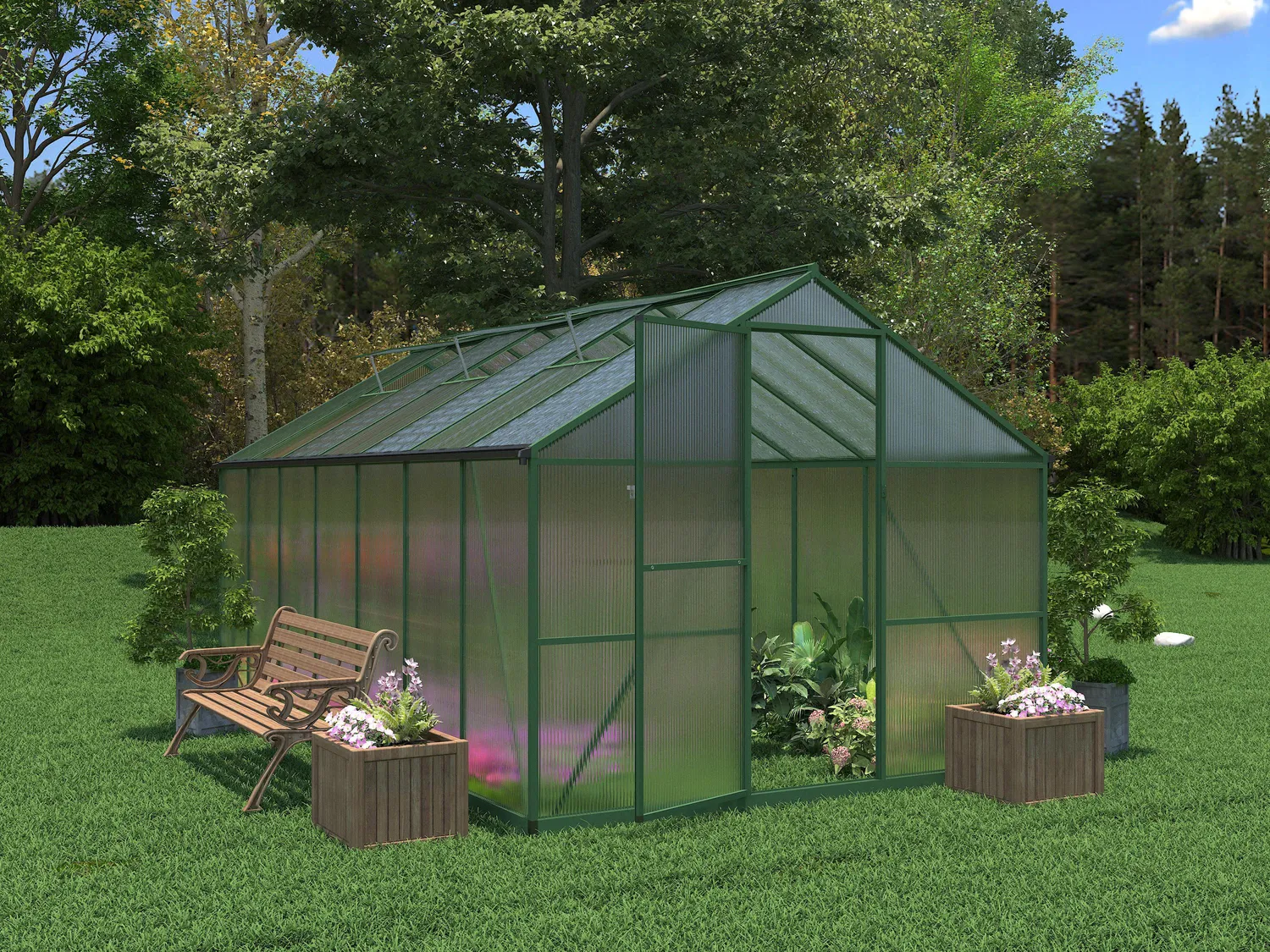
Polycarbonate: good insulator and impact-resistant, but less aesthetic than glass
Polycarbonate is a modern alternative to glass. Available in single or twin-wall panels, it offers good insulation and superior impact resistance.
✅ Advantages:
- Highly impact-resistant; far stronger than traditional glass.
- Good thermal insulation, especially in the twin-wall version.
- Lightweight, making installation and transport much easier.
- Less expensive than glass, particularly in single-wall options.
❌ Inconvenients:
- Lower light transmission than glass (around 80% compared to 90%).
- Yellows and degrades over time, notably under the effect of UV rays.
- Less aesthetic; it gives a more "plastic" look to the greenhouse.
🔎 Best suited if... You live in a windy or storm-prone area, and you are looking for a sturdy, well-insulated greenhouse at a reasonable cost.
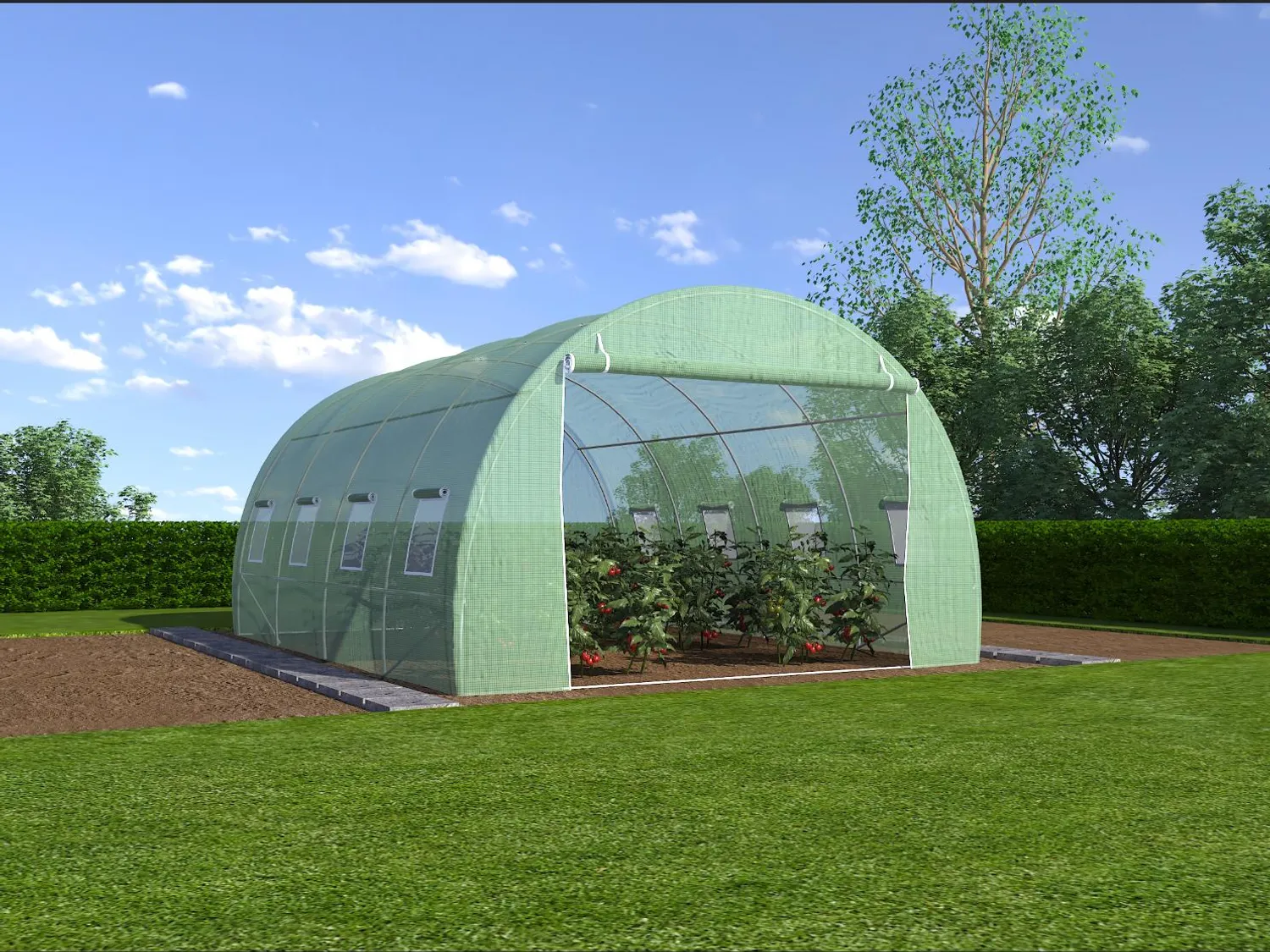
Plastic (PE sheeting, PVC): economical, but less durable
Plastic greenhouses are the most affordable, often used for tunnel greenhouses or temporary structures.
✅ Advantages:
- Very affordable cost, ideal for tight budgets.
- Easy installation, lightweight, and modular.
- Good light transmission, comparable to that of glass.
❌ Inconvenients:
- Limited durability; the sheeting must be replaced every 3 to 5 years on average.
- Poorer insulation, which may require heating support in winter.
- Sensitive to UV rays and bad weather; can rip under high winds.
🔎 Best suited if... You have a limited budget or need a temporary greenhouse for specific seasonal crops.
Aluminium: lightweight and corrosion-resistant, but pricier
Aluminium is a material commonly used for modern greenhouses, particularly those clad in glass or polycarbonate.
✅ Advantages:
- Lightweight, which makes assembly straightforward.
- Highly resistant to corrosion, making it ideal for damp environments.
- Aesthetic and durable; it does not rust and requires very little maintenance.
❌ Inconvenients:
- Less robust than steel, especially against high winds.
- Higher cost, particularly for large structures.
🔎 Best suited if... You are looking for a beautiful, long-lasting greenhouse, and you live in a region with a temperate climate without violent winds.
Galvanised steel: robust, but sensitive to corrosion
Galvanised steel is a very strong material, frequently used for tunnel greenhouses and large agricultural structures.
✅ Advantages:
- Extremely robust, making it ideal for windy regions.
- Less expensive than aluminium, especially for grander greenhouses.
- High capacity to support heavy loads, useful for hanging extra equipment.
❌ Inconvenients:
- Sensitive to corrosion if the galvanisation wears off over time.
- Heavier than aluminium, which can make setup more complex.
🔎 Best suited if... You live in an area with high winds or need a highly resilient greenhouse for intensive growing.
Material Comparison Summary
Criteria | Glass | Polycarbonate | Plastic (PE/textile) | Aluminium | Galvanised Steel |
Aesthetics | ⭐⭐⭐⭐⭐ | ⭐⭐⭐ | ⭐⭐ | ⭐⭐⭐⭐ | ⭐⭐⭐ |
Durability | ⭐⭐⭐⭐ | ⭐⭐⭐ | ⭐ | ⭐⭐⭐⭐ | ⭐⭐⭐⭐ |
Thermal Insulation | ⭐⭐ (single) / ⭐⭐⭐⭐ (double) | ⭐⭐⭐⭐ | ⭐ | ⭐⭐⭐ | ⭐⭐⭐ |
Impact Resistance | ⭐ | ⭐⭐⭐⭐ | ⭐ | ⭐⭐⭐ | ⭐⭐⭐⭐ |
Ease of Assembly | ⭐⭐ | ⭐⭐⭐ | ⭐⭐⭐⭐⭐ | ⭐⭐⭐⭐ | ⭐⭐ |
Price | 💰💰💰💰 | 💰💰💰 | 💰 | 💰💰💰 | 💰💰 |
Maintenance and durability
Investing in a greenhouse is a long-term decision, and to make the most of it, proper maintenance is essential. The durability of the framework and cladding depends on the materials chosen, climate conditions, and precautions taken across the seasons. Here are some tips to maximise the lifespan of your greenhouse with minimal maintenance effort.
Materials requiring low maintenance
Certain materials require very little effort to stay in prime condition, which can be an important factor when making your choice.
- Aluminium: Does not rust, unlike galvanised steel. It requires no painting or special treatment. A simple rinse with soapy water is enough to keep it clean.
- Polycarbonate: Withstands bad weather well and won't shatter like glass. It can be cleaned with lukewarm soapy water, avoiding abrasive products that could scratch it. Built-in UV protection extends its lifespan and prevents yellowing.
- Glass: Highly durable if it doesn't break. Regular washing keeps light transmission high. Watch out for moss and lichen that can build up along the frame profiles.
- Galvanised steel: Highly robust but can rust if the protective coating wears down. Regularly check for rust spots and apply a rust-resistant paint if necessary.
- Plastic (PE sheeting, PVC): Very low cost but has a limited lifespan (3 to 5 years on average). It is UV-sensitive and should be replaced as soon as it begins to cloud or tear. Clean it with water and mild soap to clear away grime and mould.
Precautions to extend the life of your greenhouse
- Regular Cleaning: To maintain a clean and healthy greenhouse, regular washing is vital. It is recommended to clean it twice a year—in spring and autumn—to prevent the buildup of dirt, moss, and fungi. Using a mix of lukewarm water and black soap is an effective, eco-friendly solution. Before each new growing season, disinfecting the interior also helps prevent plant diseases.
- Maintaining Openings and Fixings: Routine care of openings and fasteners is crucial to guarantee the greenhouse's longevity. It is important to check the state of the seals and the tightness of the glass or polycarbonate panels. Lubricating door and window hinges prevents them from sticking and ensures reliable ventilation. If a part is damaged, replace it as quickly as possible to prevent the problem from worsening.
- Protection Against Bad Weather: To safeguard your greenhouse from severe weather, it is vital to reinforce its anchoring, especially in windy areas. Installing guy wires or securing it to concrete anchors greatly improves stability. In winter, regularly clear snow off the roof to prevent any risk of collapse under heavy weight.
- Monitoring Humidity and Temperature: To ensure an optimal environment, it is important to track humidity and temperature closely. Using a thermometer and a hygrometer allows you to follow internal conditions precisely. Regular airing helps limit condensation and prevents fungal diseases. Additionally, spreading mulch helps regulate soil moisture, supporting crop health.
Extra options for a durable, high-performance greenhouse
To optimise how your greenhouse works and reduce manual maintenance, several accessories can be added:
- Gutters and Rainwater Harvesting: Prevents water runoff from dirtying the greenhouse walls or causing ground leaks. It allows you to collect rainwater to water your crops in an eco-friendly way. Cleaning the gutters twice a year is enough to prevent blockages.
- Shade Blinds: Protect against overheating in the peak of summer. They can be installed as manual or automatic shade sails to regulate sunlight based on plant needs.
- Automatic Ventilation Systems: Regulate temperature without human intervention. They operate using thermal cylinders that open the windows automatically based on the ambient heat. This avoids excessive condensation, which can foster diseases.
Practical Maintenance Routine Checklist
Feature | Maintenance Advice | Frequency |
Cleaning Panels | Soapy water, soft brush or microfibre cloth | 2 times / year |
Checking Fixings | Inspect seals, screws, and hinges | Once a quarter |
Wind Protection | Reinforced anchors, check guy wires | At installation & pre-winter |
Humidity Monitoring | Daily ventilation / check hygrometer | All year round |
Roof Snow Clearing | Soft broom, clear accumulation gently | After each heavy snowfall |
Gutter Maintenance | Clear out leaves and debris | 2 times / year |
Glazing Inspection | Check for cracks or UV degradation | 1 time / year |
The ideal greenhouse: your plants need a roof too!
Choosing the ideal greenhouse for your garden involves looking at essential factors like climate, available space, and how you plan to use it. Each type of greenhouse offers specific advantages, but it is crucial to choose based on your unique goals to maximise your harvests and the structure's longevity.
To sum it up, here is a final comparison of the different types of greenhouses to help you make the best choice:
Type of Greenhouse | Ideal For | Key Advantages | Main Drawbacks |
Tunnel Greenhouse | Family vegetable patches | Economical, large surface area | Less resilient to extreme weather |
Glass Greenhouse | Year-round growing & Orangeries | Beautiful, premium light transmission | Higher cost, fragile panels |
Polycarbonate Greenhouse | Colder or hail-prone climates | Great insulation, impact-resistant | Less traditional aesthetic than glass |
Lean-to Greenhouse | Courtyards and small spaces | Compact, enjoys building warmth | Restricted to the house's orientation |
Mini Greenhouse | Balconies, decks & seedling starters | Low footprint, highly affordable | Extremely limited growing volume |
Bioclimatic Greenhouse | Eco-friendly, sustainable gardening | Self-sufficient, superb energy efficiency | Complex design, high initial investment |
Summary of key takeaways:
- Match your choice to your climate: Prioritise a sturdy, well-insulated greenhouse for cold regions, a highly ventilated model for hot climates, and a heavily anchored structure for windy zones.
- Respect your available space: A lean-to or mini greenhouse will perfectly suit small gardens and balconies, whereas a tunnel or bioclimatic model is far better suited to wide, open spaces.
- Anticipate your future needs: Think about how your crops might expand and how you will use your greenhouse in the years to come.
Finally, do not overlook the importance of properly preparing the ground for installation and planning for regular maintenance routines. This will extend the durability of your greenhouse so that it remains an effective, joyful gardening tool for many years to come! 🌱