
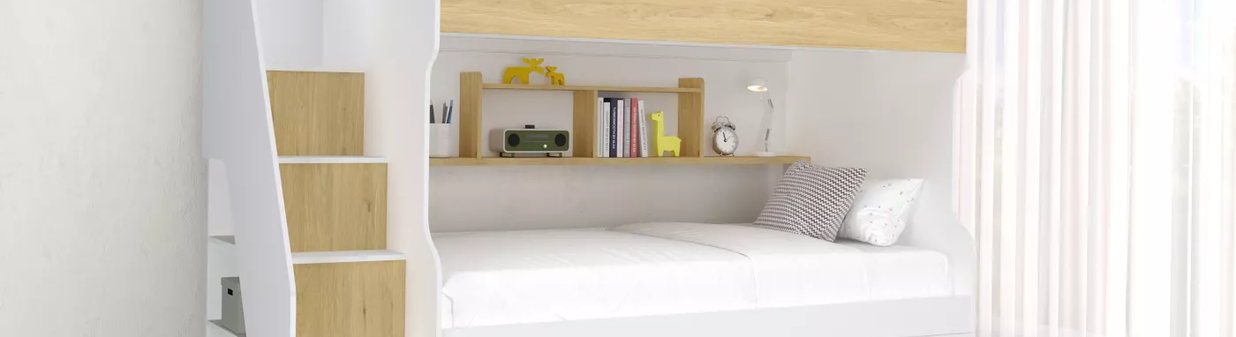
How to choose the right bunk bed for a child's bedroom
Designing a child's bedroom can quickly become a headache, especially when space is limited. The bunk bed for children is a clever solution that frees up floor space while offering a comfortable and secure sleeping area. This type of bed is particularly popular in families with several children sharing the same room or when you want to set up an extra sleeping corner for guests. In addition to its practical aspect, bunk beds come today in many models tailored to the tastes and needs of each child.
Whether you are looking for a classic and functional model or a cabin bunk bed that invites adventure and play, it is vital to take certain criteria into account before making your choice. Safety, design, adaptability, built-in storage… Discover all the elements to consider when choosing the ideal bunk bed for your child.
Essential criteria for choosing the right bunk bed
Safety first
Safety is a paramount aspect when choosing a bunk bed for a child. Before anything else, it is important to check that the model complies with European safety standards, thereby guaranteeing risk-free use.
The top bed must be equipped with sturdy safety rails to prevent any risk of falling during the night. The ladder providing access to the upper bed must be as stable as it is secure, preferably slanted or fitted with non-slip steps to limit slips. Finally, the robustness of the bed is essential: a solid wood or reinforced metal frame will offer better durability. To prevent injuries, it is vital to check that the corners and finishes of the bed are well-rounded to limit the risk of accidental injuries. A well-designed model will thus offer your child a sleeping space that is both comfortable and safe.
From what age can you choose a bunk bed?
Age is a determining factor when choosing a bunk bed for a child, mainly for safety reasons. Experts generally recommend waiting until at least 6 years old before putting a child on the top bunk. Below this age, the risks of falls and injuries are higher.
For younger ones, low bunk beds exist tailored to toddlers, featuring reinforced safety rails or a bottom bunk close to the floor. Certain adaptable models also allow you to adjust the height of the bed as the child grows. Thus, a bunk bed for a 3-year-old child must above all prioritise stability and safety, with wide ladders and rounded corners.
What bunk bed height should you choose? Check room dimensions
Before buying a bunk bed, it is vital to precisely measure the available space in the room. The room must be wide enough to avoid a cramped feeling and allow for smooth movement.
It is also important to check the ceiling height: a minimum of 60 cm of free space from the top mattress to the ceiling is recommended to prevent the child from bumping their head when sitting up. In a room with limited ceiling height, it may be preferable to opt for a low bunk bed or a loft bed, which frees up floor space without rising too high.
The choice of bunk bed height depends on several factors, notably the ceiling height and the available space in the room. Here are the main options:
- Low bunk bed (under 140 cm in height): This type of bed is ideal for young children or for rooms with limited ceiling height. Its main advantage is that it reduces the risk of falls and allows easy access to the top bed. Underneath, it is often possible to install storage drawers to optimise space.
- Standard bunk bed (between 140 and 170 cm in height): This is the most common model, suitable for children from 6 years old. It allows for a comfortable space at the bottom, but can also be paired with drawers, a small desk, or a shelf for an optimised layout.
- High bunk bed (over 170 cm in height): Intended for rooms with a sufficiently high ceiling, this type of bed offers a generous space under the lower bunk. You can install a desk, a wardrobe, or a relaxation corner there. This is an excellent option for older children or teenagers who need a well-organised personal space.
The choice of height must therefore be made based on the child's needs just as much as the desired layout in the bedroom.
Provide sufficient space between the two bunks
A good bunk bed must leave enough space between the bottom mattress and the top bed so that the child on the bottom can sit up or stand up without bumping themselves. An overly restricted space will create a feeling of confinement or make the bottom bed uncomfortable. It is advised to provide a space of 80 to 90 cm between the two bunks to guarantee maximum comfort.
Wood or metal: which material to choose?
The choice of material plays a key role in the durability and aesthetics of the bunk bed.
- Solid wood, like pine or oak, is particularly appreciated both for its robustness and its warm appearance. It is also more stable, thereby reducing the risk of creaks and vibrations with every movement of the child.
- Metal, on the other hand, is lighter but also more modern. It can be a good option for contemporary-style rooms, but it is important to ensure that the structure is well-secured to avoid noise and a lack of stability.
Whichever material is chosen, privilege models that are FSC or PEFC certified, guaranteeing wood from sustainably managed forests. Similarly, opt for solvent-free paint to preserve children's health.
Choose the right extra options
Certain bunk bed models offer practical options that enhance their functionality:
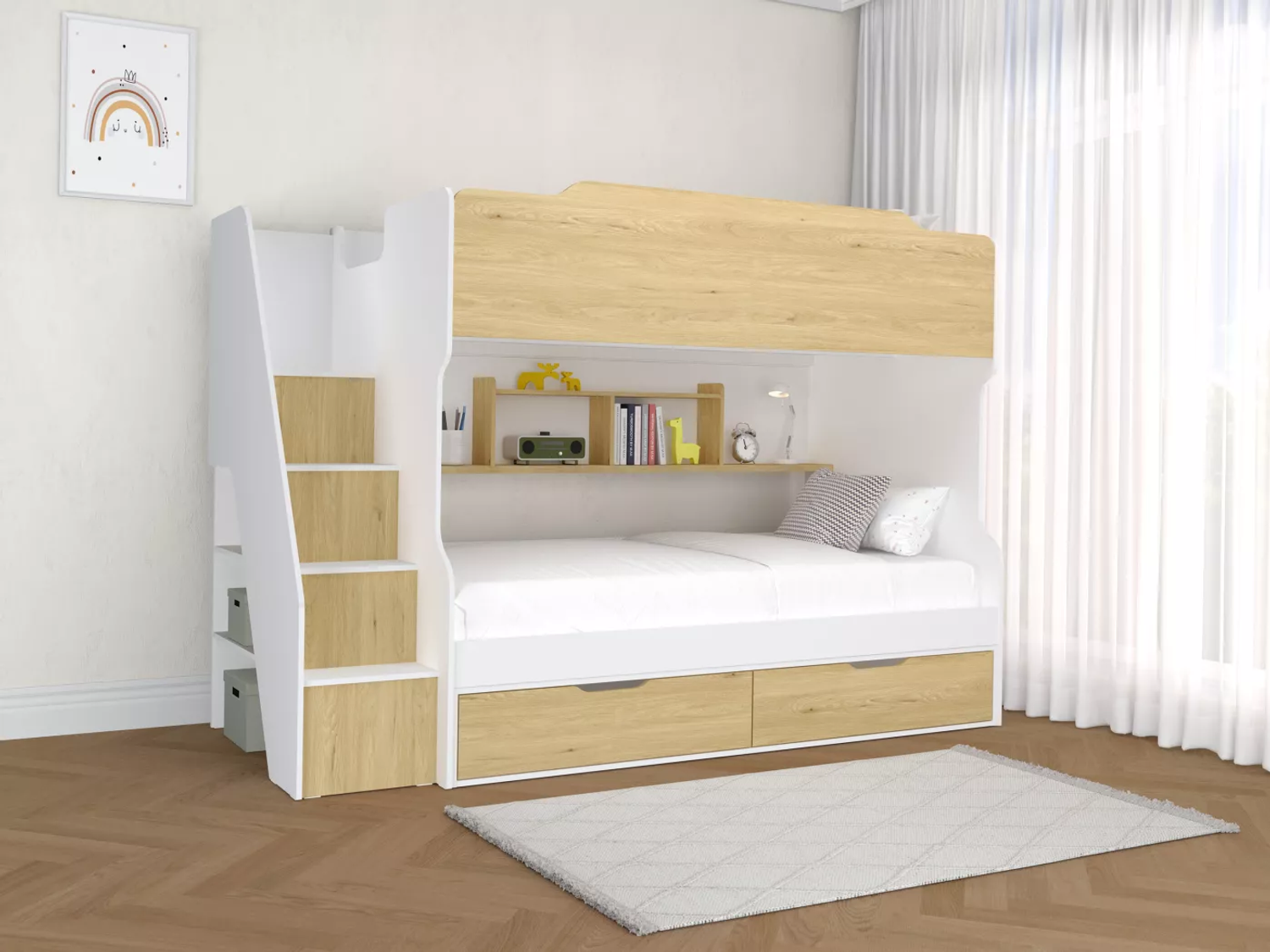
- Drawers under the bed: Perfect for optimising storage, keeping sheets, clothes, or toys away.
- Built-in shelves: They allow children to keep their favourite books and objects close at hand.
- Curtains or canopies: Transform the sleeping area into a space that is as cosy as it is playful for little ones.
- A third pull-out bed: Certain models offer a trundle bed under the bottom bunk, ideal for hosting an occasional guest.
Different styles of bunk beds for children
The bunk bed must not only be functional but also integrate harmoniously into the room's decoration.
- Classic bunk bed: Composed of two sleeping areas one above the other, it is ideal for optimising space in a shared room. This model is particularly valued in families where children share a room, fostering better organisation and a more structured environment. It allows you to free up valuable floor surface, thereby offering more room for a desk, a play area, or extra storage. It is also adaptable: these models allow you to separate the bunks into individual single beds.
- Cabin bunk bed: Perfect for stimulating children's imagination, this playful model integrates a play space under the top bunk. Designed to combine functionality and fun, the cabin bunk bed transforms bedtime into a true adventure. Certain models are equipped with roofs, windows, and sometimes even little ladders, offering an immersive world where children can make up stories to develop their creativity. It is perfect for a child who needs a stimulating and reassuring environment.
- Adaptable bunk beds: Adaptable bunk beds also exist, which can be transformed into two individual beds as the children grow up. This type of furniture is ideal for accompanying the different stages of a child's life without requiring frequent new purchases. It is perfect for parents who anticipate long-term changes in the bedroom layout.
- Bunk beds with a trundle bed: Bunk beds with a trundle bed are another interesting alternative. They allow you to add a third pull-out bed, perfect for welcoming a visiting friend or family member. These models are often favored in homes where space is tight and flexibility is essential.
- L-shaped bunk beds: Finally, L-shaped bunk beds stand out with their offset design, where the bottom bed is positioned perpendicularly to the top one. This type of layout creates a more open space and can be combined with a desk or shelves, further optimising the organisation of the room.
Go choose the perfect bunk bed for your child!
The bunk bed is a clever solution for gaining space without making compromises on comfort and safety. By taking your child's age, materials, or storage options into account, you will find the ideal model for a bedroom that is both functional and stylish!
