
Safety and Regulations: Everything You Need to Know Before Installing Your Pool
Installing an outdoor swimming pool can transform a garden into a true space for relaxation, but this project involves specific safety and regulatory requirements. Before getting started, it is essential to understand the rules governing each type of swimming pool, whether it is an above-ground swimming pool, an in-ground swimming pool or a swimming pool with a cover. To discover the different options available, you can browse this selection of swimming pools suitable for all projects.
Understand the legal obligations before installation
Building a swimming pool is not merely an aesthetic or practical choice. It falls within a strict regulatory framework defined by the Town and Country Planning Code and the Construction Code.
Depending on the type and size of the pool, different formalities are required:
- Prior approval application for a swimming pool with an area of between 10 m² and 100 m², with or without a shelter less than 1.80 m high
- Planning permission for a swimming pool of more than 100 m² or with a shelter exceeding 1.80 m
- No formalities for an above-ground swimming pool installed for less than 3 months a year (except in a protected area)
These rules apply equally to a semi-in-ground swimming pool and a conventional in-ground swimming pool . In a designated area or near a listed historic monument, additional requirements may apply, particularly regarding visual appearance and positioning.
Your commune’s Local Urban Plan (PLU) specifies the distances to be observed from property boundaries. Generally, a minimum distance of 3 metres is required, but this may vary depending on the commune.
Mandatory safety equipment
Since the Act of 3 January 2003, any private swimming pool for individual or shared use that is in-ground or partially in-ground must be fitted with a standardised safety device. The aim is to prevent the risk of drowning, particularly among young children.
Four types of equipment are recognised as complying with French standards (NF P90-306 to 309):
- Safety barriers with a secure gate preventing access to the pool
- Subsurface or perimeter alarms detecting falls into the water
- Safety covers capable of supporting the weight of an adult (minimum 100 kg)
- Lockable enclosed pool shelters completely covering the pool
Each solution has specific characteristics. For example, a submerged alarm must detect a fall of at least 6 kg, while a safety cover must prevent a child under 5 years old from passing through.
Owners who fail to comply with these obligations may face a fine of up to 45,000 euros.
Adapt safety measures according to the type of pool
Not all swimming pools are subject to the same requirements. The type of pool directly influences the obligations and precautions to be taken.
In-ground and semi-in-ground swimming pool
These permanent installations must have a compliant safety device. Their depth, often between 1.20 m and 1.80 m, increases the risk of drowning for children. An in-ground swimming pool made of concrete or a polyester shell also requires particular attention during the design stage:
- Non-slip coping to prevent falls
- Secure ladders or steps with handrails
- Non-abrasive interior coating
Above-ground and tubular pools
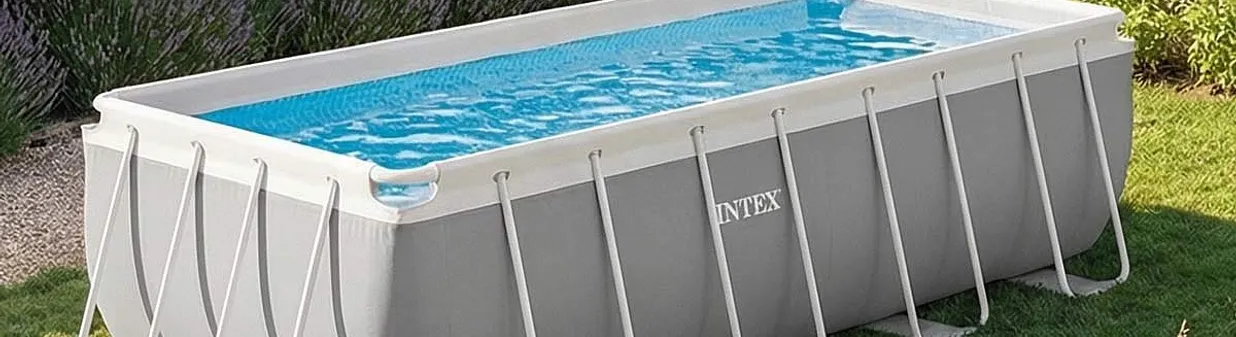
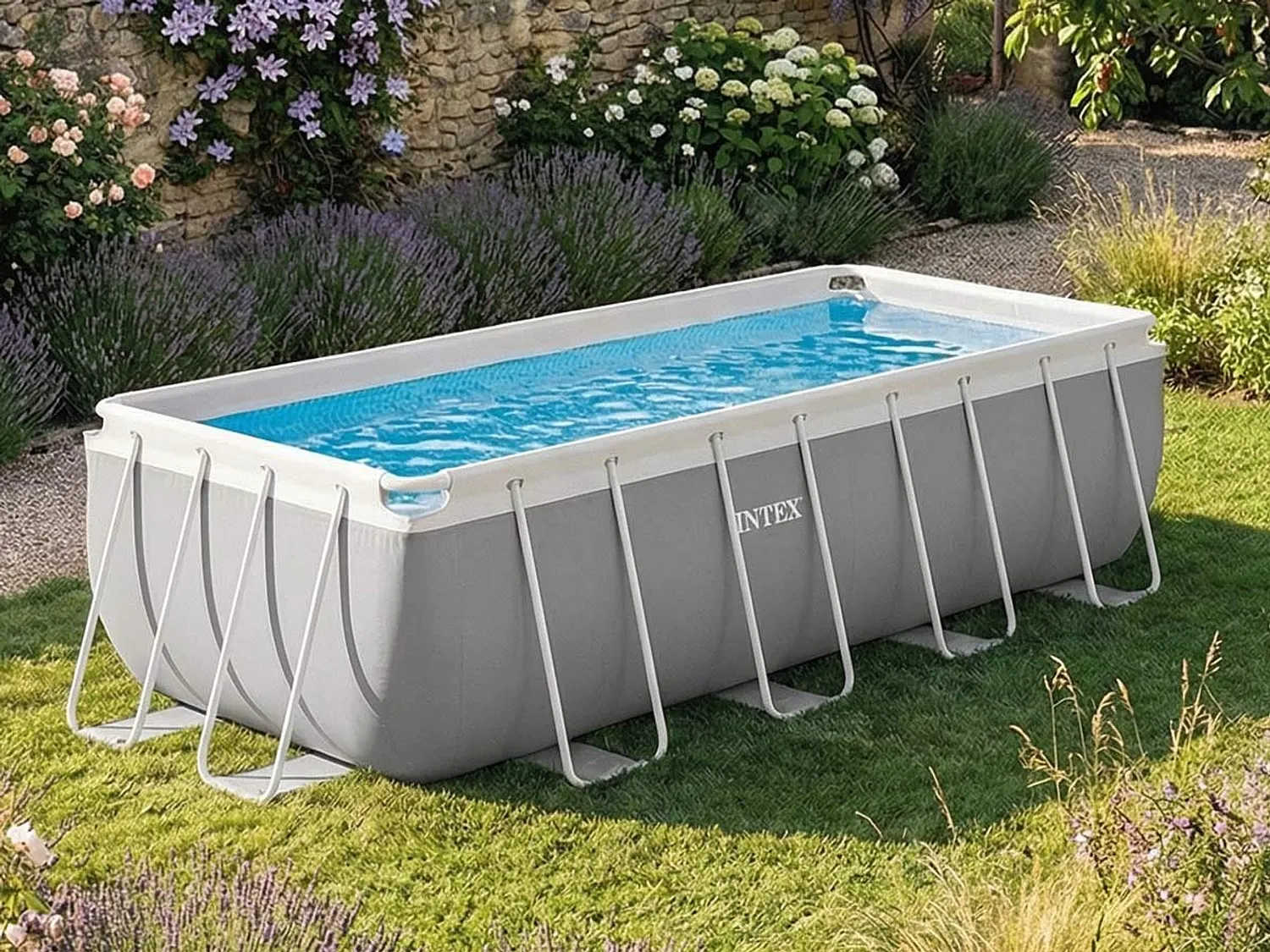
An above-ground pool or a tubular pool is not subject to the same legal requirements, as it is considered dismantlable. However, this does not mean that it is without risks. It is recommended to:
- Remove the ladder after each use
- Install a protective cover
- Position the pool on stable, level ground
A standard tubular pool generally measures between 3 m and 6 m in diameter, with a height of 1 m to 1.30 m, making it accessible to children without supervision.
Swimming pool with enclosure or covered pool
A pool with an enclosure or a covered pool offers twofold protection. It secures access to the pool while limiting dirt and heat loss.
Shelters are available in several formats:
- Low shelters (less than 1 m high)
- Medium-height shelters (between 1 m and 1.80 m)
- High shelters (over 1.80 m, considered equivalent to a conservatory)
A tall shelter generally requires planning permission. By contrast, a low shelter can be installed with a simple prior declaration.
The technical standards to comply with
Beyond the visible equipment, a swimming pool must comply with strict technical standards to ensure users’ safety.
Water quality
Poorly maintained water can cause skin infections or irritation. Essential parameters should be checked regularly:
- pH between 7.2 and 7.6
- Chlorine level between 1 and 2 mg/L
- Ideal temperature between 24 °C and 28 °C
A high-performance filtration system, capable of replacing the water every 4 to 6 hours, is essential.
Electrical installation
Electrical equipment must comply with the NF C 15-100 standard, which imposes strict rules (These precautions greatly reduce the risk of electrocution):
- Minimum distance of 3.5 m between the pool and electrical sockets
- Use of 30 mA residual-current devices
- Protection of cables against moisture
Coatings and materials
The choice of materials directly affects durability and safety:
- Wooden pool: warm, natural structure; requires Class IV autoclave treatment to withstand moisture
- Rigid pool: sturdy steel or composite structure, better resistance to deformation
- PVC liner: recommended thickness of 75/100 to provide good resistance
To discover robust and durable models, browse this selection of rigid swimming pools suitable for permanent installations.
The owner’s insurance and liability
Installing a swimming pool entails civil liability for the owner. In the event of an accident, the absence of a compliant safety device can have serious legal consequences.
It is strongly recommended to:
- Declare the swimming pool to your home insurer
- Check the public liability cover
- Take out specific additional cover if necessary
Some insurers even require documents confirming that the safety equipment complies with the relevant requirements.
Maintenance rules to ensure safety
A well-maintained swimming pool considerably reduces the risk of accidents and extends the lifespan of the facilities.
Daily maintenance
A few simple steps can help maintain a safe environment:
- Clean the surface of the water with a pool skimmer
- Check the water level (ideally halfway up the skimmers)
- Check the clarity of the water
Weekly maintenance
A more thorough interview is required:
- Clean the filter
- Adjust the pH and disinfectant treatment
- Brush the walls to prevent deposits
Seasonal maintenance
Before winter or when recommissioning:
- Carry out active or passive winterisation
- Check the condition of the liner and equipment
- Thoroughly clean the pool
A poorly maintained swimming pool can quickly become slippery, cloudy or dangerous.
Best practices for securing your pool area
Beyond the legal requirements, certain habits enhance safety around the pool.
Adopt responsible behaviours:
- Constantly supervise children, even when a safety device is present
- Prohibit dangerous activities such as diving into shallow water
- Install sufficient lighting for night-time swimming
- Keep chemicals out of children’s reach
The layout of the space also plays an important role. A non-slip terrace, stable furniture and a shaded area contribute to a safe and pleasant environment.
Choose a compliant pool suited to your project
The choice of model depends on many criteria: budget, available space, intended use and regulatory requirements.
A wooden swimming pool blends harmoniously into a natural garden, while a semi-inground swimming pool offers an appealing compromise between aesthetics and cost. A covered swimming pool allows it to be used for longer throughout the year. Each project must be considered as a whole, incorporating:
- Administrative constraints
- Safety equipment
- Maintenance requirements
- Family use
A considered approach ensures a durable, secure installation that complies with legal requirements.
Installing a swimming pool is not merely a matter of comfort. It is a project governed by precise rules that ensure everyone’s safety. By complying with legal requirements, choosing suitable equipment and adopting rigorous practices, you create a reliable, long-lasting space. Thorough preparation allows you to enjoy your pool to the full, with complete peace of mind and for years to come.
