Tiles, glass, stainless steel or decorative panels: which splashback should you choose for your kitchen?
Designing a kitchen splashback is no longer just about protecting against splashes: it is a true decorative feature that shapes the room’s style and enhances your entire kitchen design. From the outset, it is therefore essential to consider heat resistance, ease of maintenance, budget and the atmosphere you want to create in your kitchen. To help you, this guide reviews the main options (tiles, glass, stainless steel, decorative panels and self-adhesive splashbacks), along with their advantages, limitations and the types of use for which they are best suited. For a complete project, consider coordinating your splashback with the worktop, the kitchen unit fronts and decorative accessories, to create a cohesive, durable overall look.
Role and dimensions of a kitchen splashback
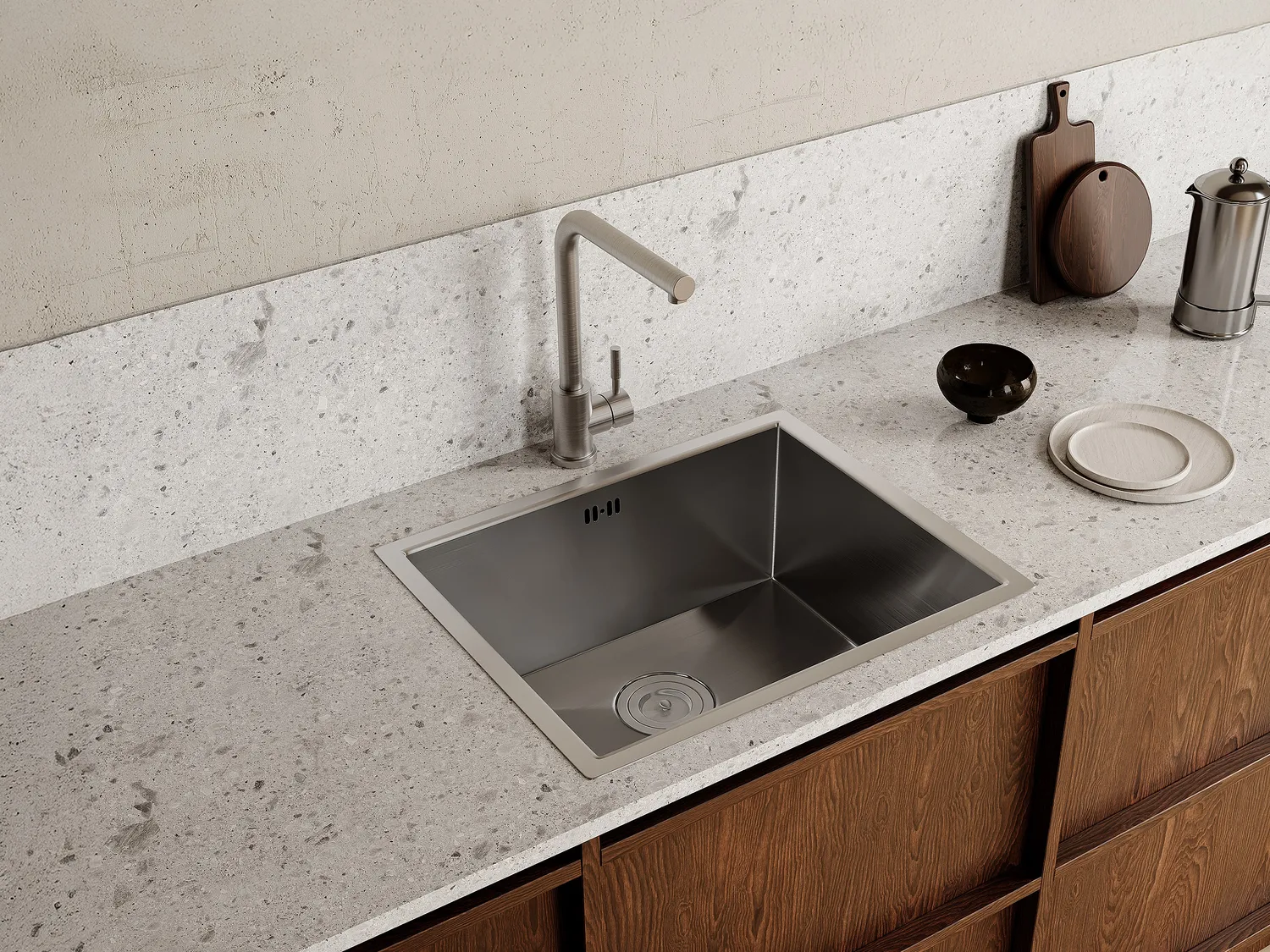
The kitchen splashback primarily protects the wall behind the worktop, sink and hob, preventing grease stains, water splashes and everyday impacts. It must therefore withstand heat, moisture, repeated cleaning and potential knocks, while remaining perfectly flat to prevent water ingress.
In terms of dimensions, the standard height of a splashback located between the worktop and the wall units is generally between 50 and 60 cm, with common measurements of 55 or 66 cm depending on the kitchen manufacturer. Behind the hob, the recommended height often reaches 65 to 80 cm to protect the wall effectively, with a common range of 70 to 80 cm when a standard extractor hood is installed. The length, meanwhile, generally follows that of the worktop, but you can extend the splashback onto an adjacent wall to enhance the decorative effect and create a continuous protective strip.
Tiled or Ceramic-Tile Splashback: A Reimagined Classic
Tiles and ceramic wall tiles remain essential choices for kitchen splashbacks, thanks to their durability and the wide range of sizes, colours and finishes available. A tiled splashback is highly heat-resistant, withstands frequent cleaning with ease and is particularly well suited to areas behind the hob or around the sink.
In practical terms, however, tiling requires careful installation on a perfectly level surface, with regular joints suited to damp areas. Cleaning the grout may require more attention, especially if you choose a light colour. However, there are coloured or water-repellent grouts that make maintenance easier and reduce the risk of staining. In terms of style, a tiled splashback can vary in format (mosaic, 10 x 10 cm tiles, metro tiles, XXL tiles) and finish (matt, glossy, stone or cement effect), making it suitable for a contemporary kitchen just as much as for a retro or Mediterranean setting.
Glass splashbacks: modernity and light
A toughened glass splashback or one made from lacquered glass immediately gives the kitchen a bright, contemporary look, thanks to its smooth, reflective surface. Glass offers good resistance to moisture and is easy to clean with a soft cloth and a suitable degreaser, making it a popular choice around the sink and worktop.
This type of splashback can withstand moderate heat, but requires certain precautions in the immediate vicinity of hobs, particularly gas hobs, to prevent thermal shock and cracking. Installation requires great precision, as the glass splashback is generally made to measure, with cut-outs for sockets, switches or any shelves, which explains why it often costs more than other materials. In terms of décor, glass can be transparent, coloured or printed, and can create effects of depth or colourful accents that add dimension to a white or minimalist kitchen.
Stainless steel splashback: the spirit of a professional kitchen
The stainless steel splashback is particularly popular with fans of professional style and kitchens with an industrial-inspired look, thanks to its uniform metallic appearance and distinctive reflections. Stainless steel, or rust-resistant steel, offers excellent resistance to heat and moisture, making it a highly sought-after material in chefs’ kitchens and demanding environments.
In functional terms, stainless steel is highly durable and easy to clean, provided that non-abrasive products and soft sponges are used to prevent micro-scratches. However, it can become scratched over time, which enhances its lived-in character but may not appeal to those seeking a perfectly smooth and uniform surface. The stainless-steel splashback is generally installed on a flat surface, sometimes as made-to-measure panels, and pairs very well with wooden, quartz or laminate worktops to soften its industrial feel while providing excellent protection behind the hob.
Decorative wood panels and splashbacks: warmth and personality
Decorative panels, whether made from laminate, composite or wood, can be used to dress up the kitchen wall with a variety of patterns: stone, concrete, brick and oxidised metal imitations, as well as graphic designs. These panels are generally installed in large sheets, reducing the number of joints and making day-to-day maintenance easier, while offering a more affordable alternative to tiles or made-to-measure glass.
The wood splashback, often made from solid wood or wood-effect laminated board, creates a warm and welcoming atmosphere, ideal for an open-plan kitchen adjoining the living room or for a space with a Scandinavian style. For long-lasting use, it is essential to choose treated, varnished or oiled wood, and to favour this material in areas less exposed to direct heat, for example behind the sink or along a preparation run. Decorative panels, whether made from wood or other materials, are also an interesting solution for covering an old tiled or ceramic-tiled splashback without undertaking major work.
Adhesive splashback: the easy and affordable solution
An adhesive splashback is proving to be a very popular option for quickly giving a kitchen a new look without major work, particularly as part of a light renovation or in rented accommodation. These coverings come in the form of self-adhesive panels or rolls, which can be cut with a craft knife and applied to a clean, dry surface: a painted wall, existing tiles, glass or stainless steel. Their main advantage is their ease of installation, requiring neither specialist tools nor professional skills.
From an aesthetic point of view, self-adhesive kitchen splashbacks come in a multitude of patterns, textures and colours, ranging from imitation encaustic tiles to marble, concrete or wood effects, making it possible to transform the feel of the room in a very short time. Resistant to water, compatible with repeated washing and generally able to withstand moderate heat, these self-adhesive splashbacks are nevertheless less durable than glass, stainless steel or tiled options, and may come unstuck or warp over time, especially near the hob. They therefore represent an ideal solution for a temporary makeover or for trying out a style before investing in a more long-lasting splashback.
Height, installation and maintenance: the parameters that shouldn’t be overlooked
Beyond the choice of material, the success of a kitchen splashback also depends on the installation height, the quality of the fitting and maintenance habits. A height of between 50 and 70 cm covers most uses between the worktop and wall kitchen unit, while the area behind the hob often requires a greater height, from 65 to 80 cm, to protect the entire wall up to the extractor hood. In some projects, a low splashback measuring 10 to 15 cm is sufficient when you want a discreet protective strip, particularly along less exposed runs.
For installation, each material has its own requirements:
- Tile adhesive and spacers
- Specific rails or adhesives for decorative panels
- Precise fixings for glass and stainless steel,
- Adhesive strips or contact adhesive for adhesive versions.
A properly prepared, perfectly flat and degreased surface ensures optimum adhesion and prevents premature peeling, particularly with adhesive splashbacks. When it comes to maintenance, the aim is to preserve the appearance of the material without damaging it by using gentle products for stainless steel, non-abrasive cleaners for glass, suitable brushes for tile grout, and damp cloths for laminate panels and adhesive splashbacks.
How to choose the right splashback for your kitchen?
To choose the ideal splashback, start by defining your priorities: budget, durability, decorative style and ease of installation. If you are looking for a highly durable and hard-wearing solution, wall tiles, tiles or a stainless-steel splashback will be particularly suitable, especially behind the hob and in high-traffic areas. For a bright, designer feel, bespoke toughened glass remains a reliable choice, provided you allow for the necessary budget and installation precautions.
If you favour visual warmth and integration with the kitchen furniture, opting for decorative panels or a wooden splashback protected with a suitable treatment will bring a welcoming feel to the room. For a quick renovation, home staging or temporary project, the adhesive splashback offers remarkable flexibility, allowing you to cover old tiles without major work and try out a trendy pattern without a long-term commitment. In all cases, make sure you coordinate the colour and texture of your splashback with the worktop, doors and flooring to create a harmonious, pleasant kitchen to live in every day.