

How to Prevent Mould Growth in a Bathroom?
The bathroom is an environment subject to extreme conditions: high humidity, temperature fluctuations, and sometimes inadequate ventilation. These factors create a setting conducive to the appearance of mould in the bathroom, a problem that is as unsightly as it is harmful to health and the durability of materials.
From its design or renovation, certain choices help to limit these inconveniences.
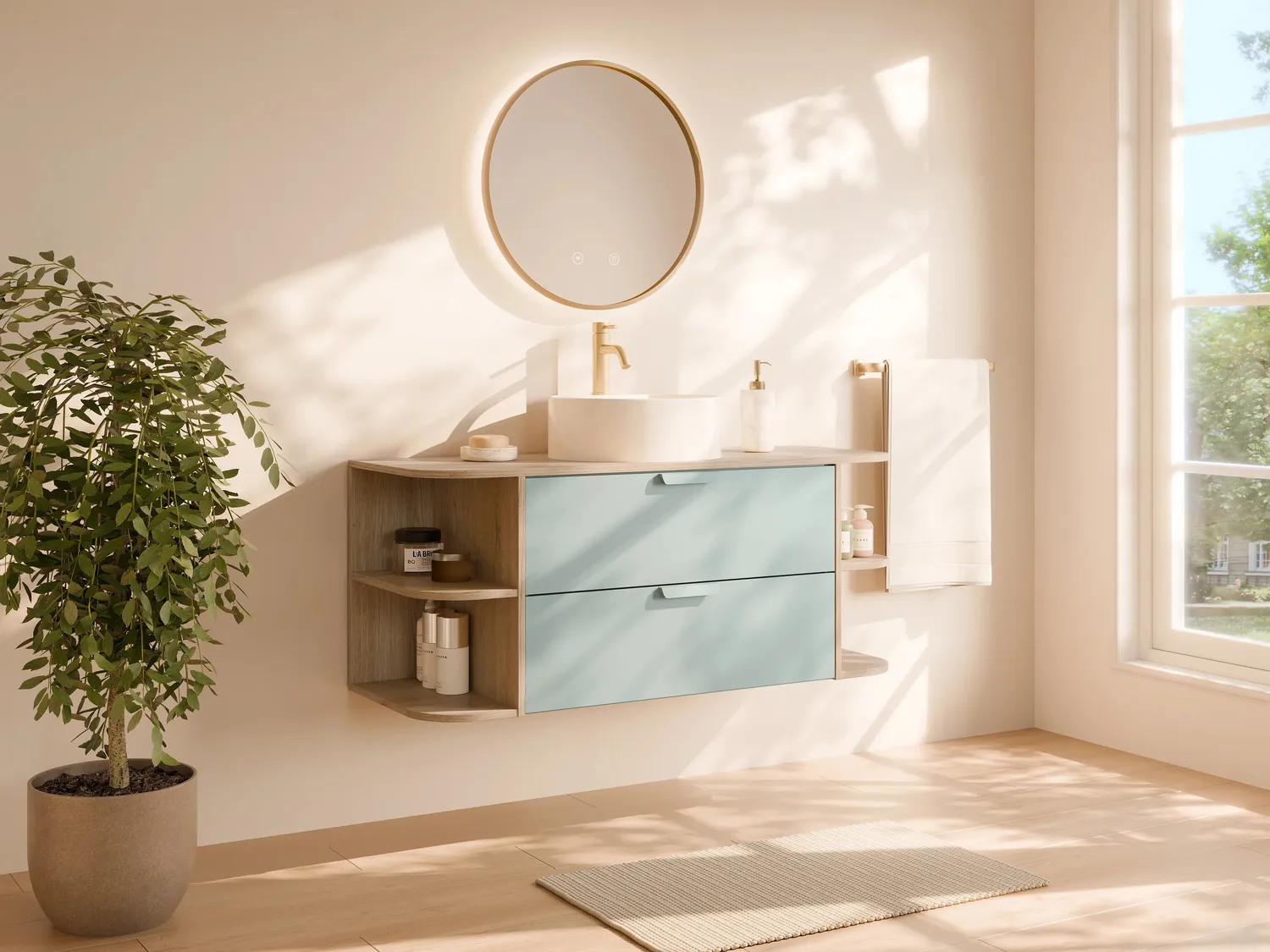
Furniture, for example, plays a crucial role. A bathroom furniture designed with moisture-resistant materials and an appropriate layout (raised feet or suspended structure) limits water stagnation zones and facilitates air circulation around surfaces.
Understanding the Causes of Mould
Mould develops when three elements are present: humidity, heat, and a lack of ventilation. In a bathroom, these conditions are common, even daily.
After a hot shower, the relative humidity can reach 80 to 90%. This water vapour condenses upon contact with cold surfaces such as mirrors, tiled walls, or ceilings. If it is not quickly evacuated, it seeps into porous materials.
Certain areas are particularly vulnerable:
- The Tile Joints, often porous.
- The Corners of Walls, where air circulation is limited.
- The Ceiling above the shower.
- The Back and Undersides of Furniture.
- The Window Frames.
Mould on bathroom joints typically appears first. It manifests as black or greenish stains, often accompanied by a persistent damp smell. Once established, the spores spread rapidly, especially if no corrective action is taken.
Ensure effective ventilation
Ventilation is the primary lever for controlling humidity. It allows air renewal and the evacuation of vapour before it turns into condensation.
A mechanical controlled ventilation (VMC) is particularly effective. A single-flow VMC extracts moist air, whereas a double-flow VMC recovers heat, which improves thermal comfort while limiting energy losses.
In a bathroom of 5 to 8 m², an extraction rate between 80 and 120 m³/h is recommended. Below this threshold, humid air stagnates and promotes the appearance of moulds.
If the room does not have an MVHR system, an electric exhaust fan is a reliable alternative. Models equipped with a humidity sensor trigger automatically when the level becomes too high.
To optimise daily ventilation:
- Open the window for 10 to 15 minutes after each shower.
- Leave the door slightly open to promote air circulation.
- Clean the ventilation grilles regularly.
- Avoid obstructing air inlets with furniture or textiles.
Effective ventilation significantly reduces the risks of bathroom mould.
Choose durable coatings
The materials used in the bathroom must be able to withstand moisture in the long term. A poor choice can accelerate the deterioration of the surfaces.
The moisture-resistant paint for bathroom is designed to prevent water from penetrating the walls. It forms a protective barrier and limits condensation. For optimal effectiveness, it is recommended to apply two coats, with a drying time of 6 to 12 hours.
The mould-resistant paint for bathrooms contains antifungal agents that prevent mould growth. It is particularly suitable for ceilings and poorly ventilated areas.
Seals also play a crucial role. An antifungal sanitary silicone seal provides better resistance to moisture. A width between 3 and 5 mm ensures long-lasting waterproofing.
Wall coverings such as tiles or laminated panels have the advantage of being minimally porous and easy to maintain. They limit water absorption and reduce the risk of mould growth.
Adopting daily preventive measures
Daily habits have a direct impact on the condition of the bathroom. Simple actions help to effectively reduce humidity:
- Wipe down the shower walls after each use with a squeegee, for example.
- Allow air to circulate by leaving the door slightly open.
- Clean the wet surfaces regularly.
- Check hidden areas behind the furniture.
These actions, carried out regularly, prevent the permanent establishment of mould and extend the lifespan of the materials.
Treat existing mould effectively
When mould appears, it is important to intervene quickly to prevent its spread. A mould remover for bathroom allows you to eliminate visible traces and destroy spores deep within. These products are generally applied by spray, with a contact time of 10 to 20 minutes.
For a more natural conversation:
- White vinegar has antifungal properties.
- Baking soda cleans without damaging surfaces.
- Hydrogen peroxide works deep within.
In the most advanced cases, especially when the joints are heavily affected, it is preferable to replace them. This intervention allows you to start afresh on a clean basis and to avoid rapid recontamination.
Integrate plants to regulate humidity
Some plants help absorb ambient moisture and improve air quality. A plant for a humid bathroom can thus complement technical solutions.
The most suitable species are:
- Boston Fern.
- Spathiphyllum.
- English Ivy.
- Orchid.
These plants appreciate warm and humid environments. Placed near an indirect light source, they help create a healthier atmosphere while adding a decorative touch.
Optimising the layout of your bathroom
The organisation of the bathroom directly influences air circulation and moisture distribution. Thoughtful planning minimises areas prone to mould development. A toilet unit for example, suspended units help free up floor space, making cleaning and ventilation easier.
Good spatial planning practices include:
- Raised furniture to avoid direct contact with water.
- Clear spaces to promote air circulation.
- Smooth and easy-to-clean coverings.
- Sufficient lighting to quickly spot signs of dampness.
A well-designed layout reduces hard-to-reach areas where moulds often develop.
Implementing sustainable prevention
Prevention relies on regular monitoring and swift interventions. A brief monthly inspection of your bathroom can detect early signs before they worsen.
The elements to check include:
- The tiling joints.
- The wall corners.
- The ceilings.
- The areas behind furniture.
Signs such as dark spots, peeling paint, or persistent odours should raise concern. A quick response can prevent more extensive and costly work. Maintaining a healthy bathroom relies on a balance between ventilation, material selection, and regular maintenance. By combining these elements, it is possible to sustainably limit the appearance of bathroom mould while keeping the space pleasant to live in.
